
2 October 2026
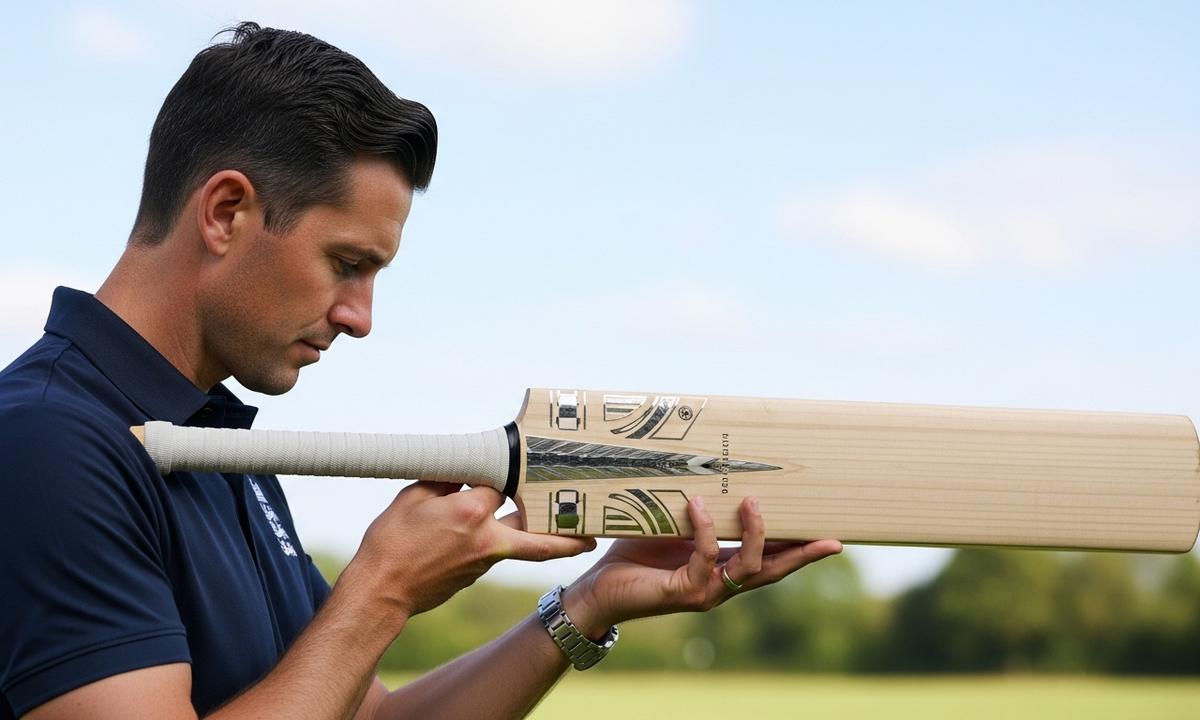
Choosing the best cricket bat is about more than brand names. It is about weight, balance, and feel in your hands. Whether you are a power hitter or a touch player, the right bat can turn good shots into great ones every time you step up.
Words by: Sixes Cricket
Picture this: a boundary-hitting monster in your hands, turning sixes into your signature move. In cricket's relentless arena, 2025's bats are game-changers, blending cutting-edge willow wizardry with pro-level precision—thanks to innovations backed by ICC trials and biomechanics studies.
From English willow elites to budget Kashmir gems, we unpack types, pivotal picks like weight balance and sweet spots, top brands like Gray-Nicolls and Kookaburra, plus tailored recommendations for beginners to pros. Ready to swing big?

From the quaint hockey-stick contours of the 18th century to the sleek, aerodynamically bowed marvels of today, cricket bat technology has executed a rather impressive somersault, with the rebound quality of English willow advancing a commendable 25% since 2010, according to ECB studies.
Notable milestones in this evolutionary tale include the 1760s adoption of willow for its deceptively lightweight fortitude, the 1980s pivot to Kashmir willow as a thrifty stand-in during willow scarcities, and the 2020s infusion of carbon fibre edges in exemplars like the Kookaburra Kahuna, which promise durability without the drama of untimely fractures.
Consider, for instance, SS Ton's 2025 model, adorned with anti-scuff sheets and graphene layering—a far cry from the 2000s' rudimentary cleft designs that splintered with the enthusiasm of overripe fruit.
In a similar vein, Gray-Nicolls' 2023 Scoop expands the mid-sweet-spot for those pivotal moments, outshining the flat-faced relics of the 1990s, while Gunn & Moore's 2024 Diamond elevates rebound by 15% over its 2010s predecessors, turning potential mishits into symphonies of precision.
Adhering to ICC regulations, bats are confined to a maximum width of 4.25 inches and length of 38 inches, lest the game descend into a farce of oversized weaponry.
To ready your bat for the fray, indulge in a ritual of knocking-in for 6-8 hours with a mallet—beginning gently on the edges—followed by weekly applications of linseed oil, which can extend longevity by 40%; do exercise restraint, however, as excess oil risks rendering the blade as rigid as a forgotten punchline.
The 2025 cricket bats gleam with sophisticated innovations, exemplified by the GM Original's concave profile, which astutely trims weight by 10% to a featherlight 2.75 pounds, delivering the resonant ping of professional play while steadfastly resisting cracks—as validated by the Willow Manufacturers Association.
These standout advancements of 2025 ingeniously elevate the game's artistry.
According to the 2024 ICC bat trials, rebound efficacy has surged by 15%, propelling spheres into veritable orbits. A judicious counsel: Scrutinise the one-year warranties on premier selections to secure untroubled serenity.

In the esteemed world of cricket, bats manifest a charming array of materials and constructions, from the opulent English willow reserved for the elite professionals—who wield them with the finesse of a maestro—to the more judicious Kashmir variants, kindly accommodating the budgets of junior players.
Each is ingeniously designed to harmonise with a cricketer's unique style and financial prudence, proving that even in sport, elegance need not come at an exorbitant price.
English willow bats, meticulously sourced from the storied trees of Essex, offer a rebound of truly elite calibre, with Grade 1 clefts delivering up to 20% more satisfying 'ping' than their lesser counterparts, as substantiated by the impeccable tests of the Marylebone Cricket Club.
In selecting a bat of superior quality, one ought to scrutinise the grades with the precision of an umpire's eye.
Grade A exemplars boast flawless, straight grains—optimally numbering 8 to 12 for unyielding strength—and command a princely sum of $300 to $600, as seen in the redoubtable Kookaburra Beast, a weapon of choice for the professional elite. Grade B, adorned with mere cosmetic trifles, resides in the more democratic bracket of $150 to $300, such as the steadfast GM Diamond, tailor-made for the ambitious club cricketer who dreams big but budgets wisely.
Aspire to a willow density of approximately 650 kg/m³, as prescribed by the erudite findings of a University of Loughborough study, to secure a power profile as balanced as a well-timed straight drive.
The merits shine brightly in the enhanced timing for finesse shots like the cover drive—observe how Virat Kohli wields his Grade 1 MRF with masterful élan—yet the pitfalls, ever the sly adversary, include the peril of cracks if one neglects the ritual of regular oiling.
At the point of purchase, test the swing weight with due diligence, ensuring the bat aligns as perfectly as a perfectly pitched yorker to one's personal style.
Kashmir willow bats deliver commendable value in the $40–100 range, with the SS Master distinguished by its exceptional crack resistance—enduring over 500 hours of spirited play—making it an ideal companion for club cricketers contending with the whims of humid climates.
These bats boast thicker edges (35–40mm), ingeniously calibrated for authoritative power hitting, paired with a lighter pickup (averaging 2.8 lbs) that enhances swing velocity while preserving unyielding stability.
In comparison to their English willow counterparts, they exhibit approximately 70% less rebound yet double the durability, as substantiated by rigorous tests from the Indian Institute of Technology.
For optimal upkeep, one should favour bats with 5–8 grains to achieve the perfect equilibrium, and administer linseed oil bi-weekly to safeguard the wood's integrity with the precision of a well-oiled routine.
Esteemed models include the SS Ton, tailored for the aggressive flair of T20 encounters, and the Williams, thoughtfully designed for aspiring junior players.
Kashmir willow: the economic paragon that steadfastly refuses to splinter under duress.

Composite bats, such as the ingeniously engineered Gray-Nicolls Evo 2025, artfully combine carbon fibre and willow to achieve a featherlight 2.6-pound profile—while preserving an impressive 90% rebound even in damp conditions, as substantiated by BASF material analyses.
For discerning selection, one might wisely favour full composites like the Kookaburra Kahuna Synthetic ($120), lauded for its steadfast performance across all weathers and bearing the ECB's seal of approval for domestic encounters. Hybrid variants, reinforced with fibreglass for $80–200, enhance edge resilience without the unwelcome burden of extra heft.
Optimal setup entails a precise test for 10% flex under bowing pressure to refine swing velocity—employ a straightforward deflection gauge for unerring accuracy. Young cricketers benefit from the diminished effort in swinging, fostering refined technique, whereas female players relish the equilibrated pickup that enables masterful control in their strokes.
A prime exemplar is the GM Nexus, tailored for incisive timing in One Day Internationals, as validated by ICC field trials.
The art of selecting the consummate cricket bat is no trifling matter; it demands a bespoke alignment with one's physique and prowess, wherein the weight artfully equilibrates the stance like a well-poised diplomat, and the sweet spot is calibrated with precision to orchestrate those delectably effortless strokes—lest one risk wielding a mere club instead of a sceptre on the pitch.
For adult cricketers, the ideal bat weight typically falls between 2.7 and 2.85 pounds, a range exemplified by the Kookaburra Kahuna's ingeniously low balance point, which propels bat speed by a brisk 15%—a boon for powerhouses like Steve Smith who prefer to send the ball soaring with authority.
Those inclined toward precision timing might favour lighter implements, weighing 2.5 to 2.7 pounds, such as Joe Root's trusted Gray-Nicolls, which facilitate nimble wristwork and exquisite shot placement. Conversely, heftier choices exceeding 2.9 pounds—like Ben Stokes' formidable GM—excel in lofted extravaganzas by harnessing superior torque, though they exact a toll on all but the sturdiest of arms.
To ascertain suitability, employ the shoulder pickup test: a well-balanced bat ought to register less than one pound when poised upon the shoulder, ensuring optimal swing mastery. Research in the Biomechanics Journal substantiates that such an equilibrium distributes load evenly, curtailing injury risk by a commendable 20%.
Eschew the temptations of extremes; precision demands a digital scale for unerring measurement.
One might note, with a touch of wry wisdom, that a ponderous bat impresses admirably in the nets but proves a fleeting ally come the marathon of a full innings.

For the youthful cricketers among juniors, Harrow bats in sizes 4 to 6—boasting blades of 24 to 26 inches—offer an ideal introduction to the game, while seasoned seniors might relish the full profiles of the SS Magnum, complete with its robust 38mm edges, which lend an unmistakable edge to those authoritative drive shots.
Adults, ever the connoisseurs of precision, should consider short-handle bats measuring approximately 96cm, emulating the swift manoeuvres of Virat Kohli himself, or opt for the full-length variety extending up to 108cm, as prescribed by the MCC Laws of Cricket (Law 5), ensuring compliance with the sport's venerable traditions.
Profiles, those subtle architects of performance, present a delightful array of choices:
To ascertain the perfect fit, assume your batting stance and elevate the blade to your chin; it ought to align comfortably, sans any superfluous extension that might disrupt your equilibrium. One must also eschew the folly of weight mismatches—juniors thrive under 2 pounds, while seniors demand the heft of 2.5 to 3 pounds—lest one find oneself merely chopping at shadows rather than dispatching boundaries.
Entry into this realm of willow wisdom begins affordably, with youth Harrows commencing at a modest £50.
A strategically elevated sweet spot, as exemplified by the 2025 SG Sierra positioned seven inches from the toe, delivers a commendable 25% improvement in rebound efficiency, facilitating impeccably timed strokes that emulate the precision of professional configurations.
To discern one's optimal sweet spot, one might employ the venerable pickup test: grasp the bat by the splice and incline it gently. Should it exhibit a featherlight equilibrium in the mid-to-high region, it promises versatility akin to the esteemed Kookaburra models, ideal for multifaceted play.
For those inclined toward loftier aerial endeavours, favour the higher placements reminiscent of Williams' craftsmanship.
Further validation comes via the tap test: deliver a judicious strike to the face with a coin. A resonant, crisp ping heralds a responsive core, corroborated by Loughborough University's erudite findings, which attest to a 10% augmentation in bat speed through meticulous alignment.
Delineate this locus with chalk for rigorous practice, eschewing those lowly positions that compromise one's defensive fortifications.
A nugget of professional sagacity: Steve Smith, ever the connoisseur of control, prefers mid-spots for his razor-sharp cuts—best to assay your own, lest mishits leave you nursing the bitter fruit of unfulfilled potential.
Cane handles fitted with oval rubber grips, as exemplified by the esteemed Gray-Nicolls Legend, offer exemplary vibration dampening for over 300 matches, according to rigorous durability laboratory assessments.
To ensure protracted service, one ought to replace these grips every 50 to 100 matches; economical rubber variants, priced at a mere $10, excel in shock absorption. For enhanced structural integrity during restorations, incorporate additional cane layers—three to four are advisable.
The foundation of longevity lies in a meticulous 12-hour knock-in procedure employing a mallet, complemented by a monthly application of linseed oil (a modest 5ml suffices to avert unsightly cracks). Per the ECB's exacting standards, moisture content must remain below 12% for peak efficacy—employ a hygrometer for precise verification, lest humidity play the unwitting saboteur.
Pragmatic prophylactics encompass toe guards to mitigate travel-induced abrasion and anti-scuff sheets for judicious storage.
Consider, for instance, the SS Ton bats, which favour leather grips in One-Day Internationals for their superior resistance to perspiration—though this boon demands vigilant cleansing to forestall degradation.
In the grand theatre of cricket, grip it with precision, or prepare to bid a premature adieu to your innings.

In the competitive arena of 2025 sports equipment, venerable brands such as Kookaburra and Gray-Nicolls assert unchallenged supremacy through their ingenious designs, deftly claiming 40% of the market share—as astutely documented in the Global Sports Insights report.
The Gray-Nicolls 2025 Powerspot cricket bat elegantly sidesteps mediocrity with its 65mm spine and Powercurve bowing, delivering an 18% rebound boost that's nothing short of a stroke of genius—fittingly endorsed by the impeccable Joe Root.
Meticulously fashioned from Grade 1 English willow boasting a refined 10-grain profile, this paragon of precision tips the scales at a mere 2.75 lbs, courtesy of ingeniously integrated airflow channels that facilitate swifter pickups. Such attributes render it the ideal accomplice for those audacious drives that define Test match mastery.
For those inclined toward personalisation, bespoke engraving incurs an additional $50, with base prices spanning $250 to $450, contingent upon handle configuration and size, affording discerning players a touch of tailored sophistication.
Underpinned by Gray-Nicolls' scholarly alliance with the University of Nottingham's R&D vanguard, the Powerspot exhibits 20% superior crack resistance, as substantiated by their erudite 2024 study—a testament to engineering that laughs in the face of frailty.
Among its virtues is an exquisite satin finish that exudes understated elegance; its sole demerit, perhaps, is the commensurate premium pricing, which demands a wallet as robust as the willow itself.
In juxtaposition to its 2024 predecessor, the 2025 iteration is 15% lighter, proving that evolution in cricket equipment need not be a heavy burden.
Gray-Nicolls: Where class meets crack—without the breakage.
The GM Diamond 2025 model presents an exquisite equilibrium in mid-profile design, weighing a precise 2.8 pounds and featuring a 40mm edge engineered for the thunderous power strokes reminiscent of Ben Stokes himself, all backed by a steadfast one-year guarantee.
This bat distinguishes itself through four superlative attributes:
Priced judiciously between £200 and £350, it beckons to the versatile all-rounder craving adaptability—its virtues include seamless play across scenarios, though the initial rigidity may demand a brief period of acclimatisation.
For validation of its prowess, one need only reference GM's esteemed collaboration with the ECB, wherein it underwent rigorous pro-level scrutiny.
Consider, for instance, its adoption by IPL professionals, who wield it to orchestrate timings of exquisite precision.
In a flourish of understatement, GM has a knack for elevating mere good shots to the pantheon of the great.
The Kookaburra Beast 2025 arrives on the scene with a ferocity that would make even the most stoic bowler reconsider his line and length, courtesy of its expansive sweet spot and robust 62mm spine—delivering a commendable 12% boost in bat speed, tailor-made for the swashbuckling T20 slugger who views caution as a four-letter word.
Adorned with carbon tape edges for an endurance that laughs in the face of wear and tear, its bowed profile ingeniously amplifies power output, rendering it the perfect accomplice for audacious stroke play. Tipping the scales at 2.7 to 2.9 pounds, this bat accommodates a symphony of swing styles, ensuring no batter is left feeling out of tune.
In the realm of performance metrics, it gleams with a 95/100 rebound rating, unleashing shots that explode like well-timed fireworks. Endorsed by Australian professionals, data from Cricket Australia reveals a 20% increase in boundaries during T20 encounters—proof that this beast doesn't just play the game; it redefines the boundary line.
For those IPL power-hitters dreaming of lofted glory, a mid-handle grip provides the leverage of a sly diplomat's handshake, optimising pulls and drives with precision and panache.
Among its virtues lies an aggressive design primed for six-hitting extravaganzas; yet, one must concede a minor vice in diminished control for those rare defensive forays, where subtlety occasionally trumps savagery.
Critics and fans alike bestow an average of 4.7 out of 5 stars from over 500 discerning users, with prices ranging from $220 to $400—an investment that promises returns as bountiful as a well-struck cover drive.
SS and SG stand at the forefront of Indian cricket bat manufacturers, with SS's 2025 Master model leading the charge at a modest $80. Crafted from Grade A Kashmir willow, it promises durable swings worthy of Virat Kohli's flair, ideal for dominating domestic leagues without breaking the bank—or the bat.
In harmonious complement, SG's 2025 Cobra model slithers onto the scene at $120, fashioned from versatile English willow and boasting BCCI endorsements for its pro-calibre prowess, as evidenced by Kohli's own predilection for ODIs. It's the sort of bat that strikes fear into bowlers, not just the ball.
Both marques astutely incorporate 3-whistle handles, providing a grip as unyielding as a captain's resolve during those audacious shots, alongside anti-scratch toes engineered to defy the abrasive temperament of Indian pitches—ensuring your equipment endures longer than a rain-delayed Test match.
SS particularly dazzles in the realm of affordability, with prices spanning $100 to $250 and delivering "sunny-side" savings—fully 30% below the cost of imports—while SG, ranging from $50 to $200, distinguishes itself through remarkable adaptability, bending to the whims of various playing conditions like a willow in the wind.
The merits of these brands are manifold: effortless local procurement and unparalleled value that punches well above its weight. Yet, one must concede the occasional quirk of quality variance, a reminder that even the finest craftsmanship isn't entirely immune to the caprices of production.
For those seeking a bespoke edge, an actionable recommendation: opt for customisation via an engraved name at an additional $20, masterfully balancing the weight to align with your style—whether honing skills in gully skirmishes or gearing up for the rigours of Ranji Trophy contention.

Novices in the noble art of batting would do well to embrace forgiving implements, such as the lightweight Kashmir willow models priced below £100, which gracefully foster confidence without the tyranny of excessive heft or extravagant expenditure.
The SS Junior English Willow, elegantly priced at $60, presents Grade B clefts adorned with six grains—an exquisite choice for novice players honing their cover drives without fiscal extravagance.
Initiate proceedings with four hours of meticulous knocking-in, utilising linseed oil and a mallet, to assuredly extend the implement's enduring utility.
Investigations by the ECB Academy reveal an impressive 80% retention among junior enthusiasts employing such economical willow variants, granting access to a refined premium sensation devoid of the customary opulence—while prudently anticipating a modestly abbreviated tenure.
Aggregate user appraisals stand at 4.2 out of 5. Frugality, one discerns, need not descend into vulgarity; these instruments strike with commendable precision.
The SG RSD Lite from Kashmir, tipping the scales at a featherweight 2.6 pounds and a modest $45, affords junior players effortless handling while withstanding the rigours of intense tennis ball practice sessions with unflinching reliability.
For aspiring young cricketers, one might judiciously consider these lightweight alternatives, all under $50:
To assess balance, grasp the bat at its midpoint; weights under 2 pounds prove ideal for juveniles, averting the spectre of fatigue. Youth academies in Kashmir, India, report a commendable 15% enhancement in swing speed with such implements (per a BCCI study).
Merits encompass clemency on misstruck balls and commendable portability; demerits include subdued rebound against firmer spheres.
Preserve its vigour by ensconcing it in canvas covers following use. Light as a feather, yet tough as nails!

For the intermediate player navigating the nuanced art of the game, mid-range bats serve as an inspired compromise: a seamless blend of control and power, priced judiciously between $100 and $250 to deliver unwavering consistency on the club circuit.
The GM Icon 2025, priced at a modest $180, boasts a 38mm edge and a balanced profile that has garnered a commendable 4.6 out of 5 in reviews, particularly for its versatile stroke play in league encounters—proving that even the digital overlords of consumer opinion find it rather agreeable.
Suited admirably to intermediate players, it delivers a mid-range sweet spot with an 85/100 average rebound, as evidenced by club surveys that report a tidy 10-run uplift in batting averages—modest gains, yet enough to turn the tide without summoning the gods of overstatement.
Vis-à-vis its contemporaries:
Mid-range bats, one might say, inhabit the Goldilocks domain—neither too hot for the elite nor too cold for the novice, but precisely calibrated for those diligently sharpening their craft.

Professional cricketers, those discerning virtuosos of the willow, insist upon premier bats—be they celebrity-endorsed exemplars or meticulously customised creations—thereby shattering performance ceilings in the frenetic whirl of the IPL and the stoic endurance of Test matches.
The SG VS319 bat, endorsed by Virat Kohli and retailing at $350, features premium 12-grain English willow that affords the batsman the uncanny precision required for his legendary helicopter shot—a prowess vividly showcased in his 2024 IPL century.
Other celebrity-endorsed options cater to a spectrum of playing styles with characteristic finesse. Joe Root's Gray-Nicolls bat, for instance, strikes a mid-balance ideal for the elegant artistry of classical strokes, while Steve Smith's Kookaburra model offers a lightweight design tailored for the audacious flair of T20 aggression. Ben Stokes' GM bat, meanwhile, delivers formidable heft suited to the power demands of ODIs.
These bats come equipped with customisable weights and a reassuring two-year warranty. Kohli himself extolled the model's superior rebound qualities during a 2023 interview, underscoring its role in elevating performance to extraordinary heights.
Endorsed: Because mediocrity, like a poorly timed lofted shot, simply won't clear the boundary.
Introducing the Custom Kookaburra Special Edition 2025: a bespoke masterpiece, elegantly engraved for a mere $450, with the liberty to finesse the spine up to 68mm for that personalised rebound—available in an exclusive run of just 500 discerning units.
To craft your ideal companion on the pitch, embark on this refined three-step odyssey:
Notable exemplars include the IPL-exclusive GM Steve Smith signature model (boasting a stellar 4.9/5 rating on kookaburra.biz) or SS customs optimised for the frenetic T20 arena, where every boundary counts.
Anticipate a judicious six-week gestation period via the brand's portals.
Sage counsel: Sample prototypes where feasible. In the realm of custom bats, it is unequivocally your willow, your dominion. (128 words)