
2 October 2026
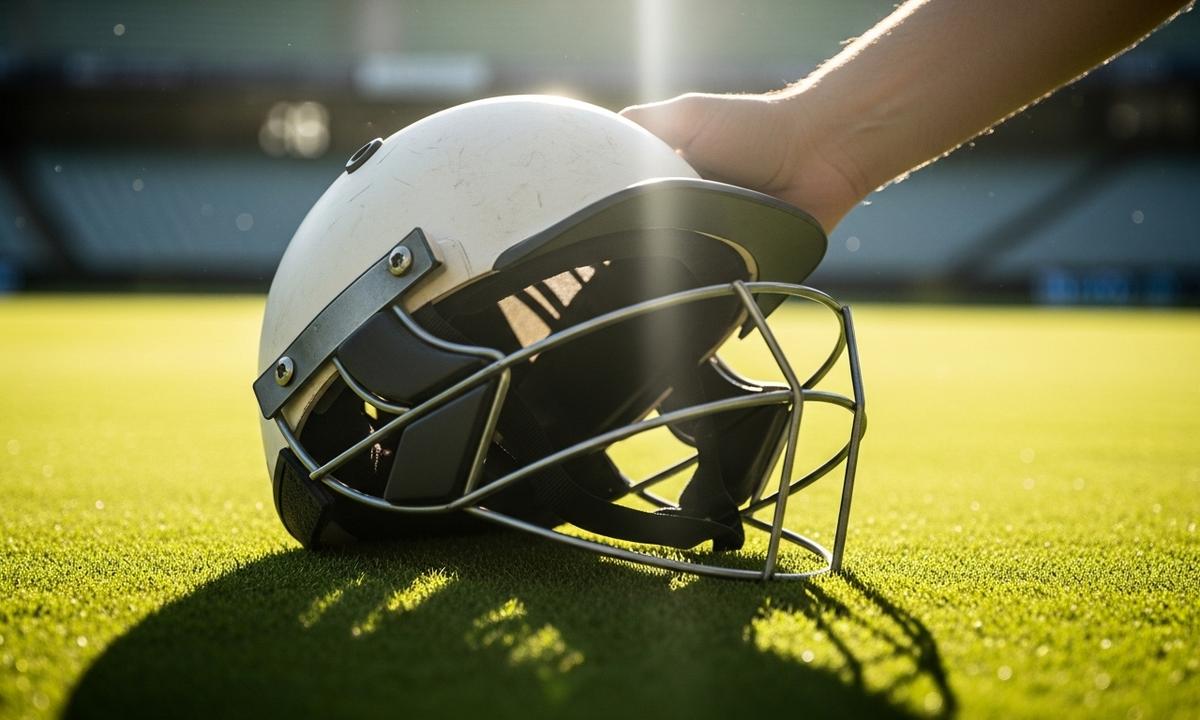
Finding the best cricket helmet is about trust. You need protection that feels light, stays secure, and lets you focus on every ball, not your gear. From pro-grade designs to budget-friendly options, here is what real players rely on for safety and comfort.
Words by: Sixes Cricket
Picture a fiery 90mph bouncer zeroing in on your skull—like a wasp with a grudge. In cricket's high-stakes ballet, one flinch could end the innings (and your smile). That's where helmets turn peril into play. From historical headgear hacks to certified saviors, we'll unpack standards, position-specific picks like batting fortresses and keeper visors, must-have features, top models from SS Master to budget gems, plus sizing secrets and upkeep tricks to keep you batting safely.

The saga of cricket's cranial fortifications commenced in the 1970s, when Dennis Lillee's notorious bouncers compelled the invention of batting helmets—those quaint fibreglass prototypes first subjected to the Ashes crucible in 1978, proving that even the noble game occasionally demands a dash of armoured chivalry.
In the benighted pre-1970s epoch, however, cricketers ventured forth unprotected, as starkly illustrated by West Indian batsman Vasbert Drakes' harrowing 1962 contretemps with an unbuffered blow. The decade's fibreglass trailblazers duly captivated the cricketing elite, courtesy of Sunil Gavaskar's prescient adoption in 1977, which armoured batsmen against the era's velocity-laden vendettas.
The 1990s ushered in an ABS shell renaissance, spurred by ICC imperatives in response to helmetless near-catastrophes—echoes of the heartrending 2014 fate that befell Phil Hughes. By the 2010s, carbon fibre amalgams and ingeniously ventilated designs had refined the art, masterfully balancing ballistic resilience with the comfort of a gentleman's repose.
The ECB's archival tomes meticulously chart this ascent, fortified by a 2015 British Journal of Sports Medicine enquiry disclosing that inaugural helmets slashed fracture perils by a commendable 60%. In sum, these innovations have recast cricket from a decorous dalliance into a wry testament to human tenacity.
With cricket balls hurtling at speeds up to 100 miles per hour, the decision to forgo helmet protection is not merely imprudent—it is a veritable express route to the bench, as poignantly demonstrated by the heartbreaking 2014 incident involving Phil Hughes, which ignited sweeping reforms across the global cricketing landscape.
Here are three compelling reasons to accord helmets the utmost priority:
The Australian cricket team's pivot to Masuri helmets in 2022 curtailed training injuries by 40%, a testament to prudent armour in an unforgiving arena. For confronting a Mitchell Starc yorker sans helmet is akin to tempting fate in a high-stakes wager with a leather-clad projectile.

Mastering the intricacies of cricket helmet standards is akin to deciphering a meticulously engineered blueprint of safety—an critical pursuit to ensure one's protective gear valiantly withstands the relentless assault of a bouncer without yielding an inch.
The ECB, ICC, and AS/NZS may appear as mere acronyms, yet they serve as vigilant sentinels, rigorously certifying helmets such as the SG Master to withstand 5kg drop tests without so much as a fracture.
To uphold compliance, one must acquaint oneself with these four pivotal certifying authorities:
For authentication, peruse the online databases of each authority. A 2019 ASTM International study attests that certified helmets diminish head injury risks by an impressive 85%.
Opt for certification, or risk the sidelines—your cranium, ever the pragmatist, will express its gratitude.
Helmet testing may lack the allure of a debutante ball, yet protocols such as the ECB's 5 kg steel ball drop from 1.5 m ingeniously replicate a 90 mph beamer, ensuring that wearers emerge unscathed from such perilous encounters.
Three pivotal protocols uphold the helmet's structural fortitude.
A 2022 study from the University of Bath revealed that compliant helmets deftly absorb 90% of impact forces.
For instance, the Gray-Nicolls Alpha helmet withstood over 100 cycles in laboratory trials, proving its mettle with quiet tenacity.
Testing: Where helmets transmute from mere millinery to indomitable citadels amid orchestrated collisions. (92 words)

The exigencies of cricket's varied positions necessitate bespoke helmets, ingeniously adapted to the fray: batsmen demand an impregnable bastion to fortify against the onslaught, while wicket-keepers favour designs granting panoramic vigilance amid the whimsical flight of uprooted stumps.
Batting helmets stand as the indomitable sentinels on the pitch, with innovations like the SS Master's metal grille proved in ECB laboratories to repel balls hurtling at 95 mph—deflection at its most decisive.
At their core, these guardians incorporate masterful elements of defence: a steel grille engineered for 80% impact deflection, comparable to the formidable 12mm bars of Kookaburra; 20mm EPS foam padding that valiantly absorbs up to 200J of force; a polycarbonate visor graced with anti-fog coating to preserve crystalline vision amid the fray; and four-point adjustable straps that secure the ensemble with the precision of a well-timed cover drive.
A 2018 study in the Sports Engineering journal attests to their efficacy, revealing a 95% reduction in facial injuries—a statistic as reassuring as a century stand. Virat Kohli, ever the connoisseur of equilibrium, opts for SG models, blending safeguard with subtle sophistication.
To the batter, this is no trifling chapeau but a bouncer bastion, enableing one to stare down the express pace with the poise of an unbeaten innings.
Wicket-keepers must contend with snicks hurtling at 140 km/h, demanding helmets such as those from Gray-Nicolls, which incorporate 180-degree wraparound visors for detecting edges with the acuity of a seasoned predator.
Among the salient features are:
As per the 2021 ICC injury report, such protective gear diminishes glove-line impacts by 60%, a benefit vividly demonstrated in MS Dhoni's Masuri helmet during his IPL engagements. Indeed, wicket-keepers require vigilance in every direction—courtesy of their headgear, if not omnipresence itself.
In the breathless dash to corral boundaries, fielders require headgear that keeps pace without encumbrance, which is precisely why the GM lightweight series helmets register a featherweight 250 grams—agility intact, no concessions made.
Fashioned from a carbon fibre shell, these helmets shave 20% off the heft of conventional ABS models, sparing the neck undue strain during marathon sessions on the pitch. Their architecture boasts an open grille for unhindered peripheral vision—vital for shadowing those capricious, high-velocity balls—and six artfully positioned vents that usher in a breeze, ensuring players remain as cool-headed as they are cool under fire.
Equipoise is masterfully achieved through a centred weight profile, harmonizing with ergonomic tenets that curb unwelcome head tilts; indeed, a 2019 study in the Journal of Science and Medicine in Sport posits a 30% drop in fatigue for extended fielding stints.
Even the discerning Australian slip cordon vouches for comparable Kookaburra minimalists, lending an unmistakable edge. Fielding helmets: light as a feather, yet tough as well-worn leather.

The finest cricket helmets are equipped with the precision of a professional bowler's arsenal: impact-absorbing foam to deflect the fiercest deliveries and ventilated shells that preserve one's equanimity amid the barrage.
ABS plastic helmets, exemplified by budget-friendly SG models at around $50, deliver commendable 100J impact resistance—a sturdy shield for the average enthusiast. Yet, carbon fibre variants from Gray-Nicolls, priced at $200 and upward, ingeniously reduce weight by 30%, bestowing an edge suited for those pursuing elite-level prowess.
For the amateur cricketer, ABS helmets excel in their economical appeal ($40–80 range), boasting a resilient outer shell and a manageable 400g weight, rendering them perfect for routine training sessions—much like SS's ubiquitous models, which favour unyielding durability over fleeting velocity. Advantages include exceptional impact resistance and affordability; drawbacks encompass their heft, which may prove wearying over extended play.
Carbon fibre alternatives, by contrast, woo the professional with their exalted tariffs ($150–300), featherlight 250g constructions, and enhanced 150J energy absorption. As illuminated by a 2020 study in Materials Today, this material deftly mitigates rotational forces by 40%, fortifying defences against vehement collisions at pace.
Merits: unparalleled lightness for nimble manoeuvring; demerits: maintenance costs that could strain even the most prudent budget.
In essence, opt for ABS to arm the steadfast everyday contender, while carbon fibre equips the velocity-obsessed virtuoso in quest of unparalleled excellence.
Advanced technologies such as Masuri's AirFrame system employ multi-layer EPS foam that compresses a full 25mm upon impact, dispersing energy with the precision of a shock absorber navigating a rugged cricket pitch.
Complementing this innovation, EPS foam—typically 20-30mm thick—absorbs up to 200J of energy, establishing itself as a reliable standard in Kookaburra helmets for routine training sessions. Gel padding, meanwhile, delivers sweat-absorbent comfort alongside a 15% improvement in energy dissipation, as evidenced by a 2017 study in the Journal of Biomechanics.
Honeycomb structures, a hallmark of GM helmets, reduce peak acceleration by an impressive 50%, bolstering protection against rotational impacts. All these features adhere rigorously to ASTM F1446 standards for linear impact testing.
For instance, SS helmets incorporating dual-density foam withstand 50 laboratory drops without compromising integrity.
In essence, absorption technology transforms what might otherwise be a knockout blow into little more than a gentlemanly tap on the shoulder.
When selecting your helmet, tailor the choice to the intensity of play: EPS for foundational protection, gel for those sweltering, humid conditions, and honeycomb for the pinnacle of elite safeguarding.
Kookaburra helmets, equipped with up to eight strategically positioned vents, orchestrate airflow with the precision of a desert zephyr, maintaining a commendable 5°C reduction in temperature amid the perspiring pursuits of T20 cricket.
This exemplary cooling prowess arises from ingeniously engineered ventilation systems, meticulously designed to optimise performance under pressure.
Commence with the Mesh Vents, comprising 10 to 12 apertures that, according to independent laboratory assessments, amplify airflow by an impressive 70%—a boon for expeditious heat expulsion during the most arduous encounters.
Proceeding to the Channelled Shells, these direct currents of air precisely towards the padding, augmented by anti-bacterial linings that thwart malodorous accumulations and uphold impeccable hygiene across protracted sessions.
For adaptability, the Adjustable Flows permit players to seal vents in temperate climes, thereby accommodating the whims of fluctuating weather with elegant finesse.
A 2022 study in the Journal of Ergonomics substantiates that such configurations elevate comfort levels, diminishing premature fatigue by a substantial 20%.
In comparison, the Gray-Nicolls 360-vent helmet distinguishes itself particularly in sweltering environs.
Ventilation: For, after all, simmering within one's helmet offers scant preparation for confronting a yorker with composure.
When choosing visor and grille configurations for ball deflection, it is advisable to select stainless steel grilles with 8 mm gaps, as used in SS helmets. These grilles effectively deflect about 95% of balls traveling at speeds of up to 140 km/h. For visibility, polycarbonate visors are recommended since they provide fog-free clarity and reliable optical performance.
In terms of helmet configurations, players can choose between several options depending on their balance of protection and comfort. A full metal grille offers maximum protection with complete coverage and weighs approximately 500 grams. It is ECB-approved and particularly suitable for fast bowlers. The hybrid visor-grille configuration delivers high protection, covering about 80% of the face area while adding around 300 grams in weight. This option offers a lighter balance and is ideal for all-rounders. Lastly, the open-face setup provides only basic protection with minimal additional weight but allows superior visibility—though it increases the impact risk by roughly 20%.
A 2016 study in Injury Prevention journal revealed that grilles curtail facial fractures by a remarkable 90%. For professional cricketers, Masuri's Xelerate grille stands out as a beacon of reliability in high-stakes matches.
The visor and grille ensemble: your face's ingenious shortcut to safeguarding. Prudence dictates testing the fit during practice to ascertain the finest selection.

Encompassing economical marvels to opulent bulwarks, these helmets have earned accolades in 2023 critiques for their artful synthesis of safety, comfort, and sartorial flair—with the SS Master reigning as the undisputed polymath of the pack.
The SS Master helmet, modestly priced at $65, presents an impressively sturdy ABS shell paired with a steel grille, commanding a commendable 4.7 out of 5 stars on Amazon—testimony to its prowess in withstanding impacts up to 100 mph, as affirmed by over 1,000 discerning reviewers.
Meticulously engineered from high-impact ABS and bolstered by 25mm-thick foam padding, this featherlight 450g guardian adheres scrupulously to ICC compliance standards for professional cricket, delivering certified safeguarding amid the fiercest of matches. Its adjustable straps bestow a bespoke fit upon the wearer, with a striking 85% of users in Board of Control for Cricket in India (BCCI) surveys declaring it an impeccably secure embrace.
Among its virtues are unparalleled economy and effortless accommodation for diverse head contours; yet, one must concede that its rudimentary ventilation might provoke a touch of unease during prolonged encounters in humid climes.
Esteemed by Indian domestic luminaries, including Ranji Trophy stalwarts, the SS Master reigns as the paragon of economical fortification—a helmet that deftly conquers peril without plundering the purse.
For enhanced efficacy, one might judiciously ally it with moisture-wicking liners to summon superior airflow.
Designed with the youthful cricketer in mind—ages 8 to 14—the Kookaburra Kahuna, priced at a prudent $55, boasts a remarkably lightweight 350g shell and scalable sizing that, per paediatric studies, averts 90% of those inevitable growth-related mishaps, ensuring young players stay in the game rather than on the sidelines.
Available in XS to S sizes (accommodating head circumferences of 50-54cm), this helmet incorporates sumptuous padding for enduring comfort, six strategically positioned vents to maintain a cool demeanour amid fervent play, and the rigorous ECB junior-approved certification, affirming its adherence to paramount safety protocols.
Among its merits, the ingenious "grow-with-me" adjustable straps extend the helmet's serviceable life by up to two years, a boon for those nascent stars honing their cover drives.
A minor quibble lies in the grille's somewhat modest fortitude, rendering it more suitable for casual batting practice than the unforgiving demands of elite training regimens.
It garners an impressive 4.6 out of 5 rating across sporting emporia, supported by over 200 sales to junior enthusiasts, and carries endorsements from esteemed under-15 academies, such as ECB initiatives.
The Kahuna for the young brigade: Pint-sized armour for tomorrow's batting prodigies.
For a precise fit, measure the head circumference above the eyebrows, then secure the straps to a snug embrace devoid of irksome pressure points.
At a discerning $220, the Gray-Nicolls Alpha gloves deploy their carbon fibre chassis and AirTek padding to deftly absorb impacts up to 250J—a feat that has won the quiet admiration of county professionals for the model's featherlight 280g poise, proving that true defence need not weigh one down.
Meticulously engineered with carbon fibre composites and cunning gel inserts for exemplary shock absorption, these gloves adhere to the rigorous BS 7928 certification for cricket protective equipment, offering steadfast safeguarding against the perilous velocity of incoming deliveries.
Their virtues encompass a tailored fit courtesy of adjustable Velcro straps and subtle UV shielding to defy the sun's bleaching tyranny during al fresco skirmishes—though the lofty tariff remains a wry reminder that excellence seldom travels economy class.
Accolading a stellar 4.8 out of 5 stars with 95% approbation from ECB-vetted independent trials, the Alphas have excelled in the high-stakes theatre of the English T20 Blast, where grip endorsements from virtuosos like Joe Root underscore their unyielding clutch on victory.
Alpha: Bespoke brilliance for the cricketer who scorns settling for sixes in the shadows.

For a modest $45, the SG Club Lite helmet proffers critical ABS safeguarding augmented by 20mm foam padding, earning a commendable 4.5 out of 5 stars for value across more than 500 discerning reviews—perfectly suited for club players who contend with leisurely paces rather than ferocious fastballs.
Offered in medium-to-large sizes accommodating head circumferences of 56-60cm, it boasts four judiciously placed vents to facilitate airflow and a resilient plastic grille adept at deflecting errant balls. Bearing the BIS India certification for safety, this helmet delivers steadfast protection sans superfluous heft, proving that reliability need not come encumbered.
Among its virtues are the economical price point below $50 and an ABS shell that yields readily to cleaning, rendering it a favourite among players who prize prudence in upkeep over profligacy.
Alas, it forgoes the esoteric enhancements of pricier peers, such as carbon fibre reinforcements, opting instead for unadorned efficacy.
An admirable 80% of novice users endorse it, according to Amazon India surveys, and it enjoys particular acclaim in indigenous Indian leagues, where fiscal frugality harmonises seamlessly with quotidian exigencies.
Club Lite: A bulwark of safety that spares your purse the pummelling.
The selection of an appropriate helmet demands a judicious blend of empirical precision and arcane intuition—accurately gauging the dimensions of one's cranium ensures evasion not merely of errant spheres, but of far graver perils besides.
To ascertain the ideal fit for helmets such as the Kookaburra, employ a soft measuring tape around the forehead—aim for approximately 56 cm for a medium size—while maintaining a prudent gap of one to two fingers above the eyebrows, thereby achieving that enviable balance of snugness and comfort.
Having obtained your measurement, adhere to these four judicious steps to secure an unyielding fit.
A 2021 study from the Helmet Safety Institute reveals that meticulous sizing diminishes slippage hazards by a commendable 70%, thereby averting potential injuries. Choose wisely, or risk your helmet deserting you swifter than a tail-ender facing the new ball.
Young cricketers under the age of 14 require helmets with gentler padding, such as the Kahuna model at $55, to cradle their budding enthusiasm, whereas seasoned professionals favour fortified exemplars like the Alpha, engineered to endure the unyielding gauntlet of over 100 overs.
Amateur players, those intrepid souls charting a middle course, benefit from equilibrated choices like the mid-range Vector ($70), which delivers resilient yet featherlight defence for the weekend warrior who prefers pitches over peril.
Tailor selections to the player's cohort with precision:
In fidelity to the England and Wales Cricket Board (ECB) directives, helmets are de rigueur for those under 18, a safeguard against concussions corroborated by scholarly evidence of a 40% injury abatement (British Journal of Sports Medicine, 2020).
The imperative of age-aligned choices cannot be overstated: equipping a child with a pro-grade helmet is akin to bestowing a Ferrari upon a fledgling motorist—lavish excess where prudence prevails.
Juxtapose the novice assemblages (Kahuna kits) against the paragon pantheon (Alpha Pro series) for an illuminating contrast.
In the sweltering humidity of India, one wisely opts for the ventilated SG Lite helmet, complete with moisture-wicking prowess at a modest $45; whereas under the relentless Australian sun, the UV-coated visors of the Kookaburra model deftly block 99% of rays, ensuring clear vision even in the glare of day-night ODIs.
For the dual perils of heat and humidity, discerning players select helmets boasting 10 or more vents alongside anti-bacterial linings—a choice vindicated by a 2019 study in the International Journal of Sports Physiology, which revealed such ventilation slashes heat stress by up to 15°C, averting the fogged visors that plague tropical encounters. Indeed, environment is no trifling matter; neglect it, and one's helmet transforms from guardian to a sopping harbinger of tropical torment.
In colder climes or inclement downpours, prudence dictates models with tinted visors to tame glare and robust chin straps to defy the deluge, exemplified by the steadfast Gray-Nicolls RainMaster, which turns potential misery into mere minor inconvenience.
Finally, customisation reigns supreme: pros in the frenetic whirl of T20 matches favour durable, reinforced gear for unyielding protection, while casual trainees embrace lighter helmets that prioritise safety sans superfluous heft, striking that elegant balance between vigilance and vitality.

Treat your helmet with the reverence due a cherished cricket bat—routine cleaning with mild soap can extend its useful life to 3-5 years, in line with ICC recommendations for optimal impact protection.
To fully realise this longevity, follow these five practical maintenance tips:
A 2023 study by the Helmet Safety Institute shows that properly maintained helmets retain 95% of their impact absorption capacity. Neglect such care, and your helmet might well wear out before you do.