
2 October 2026
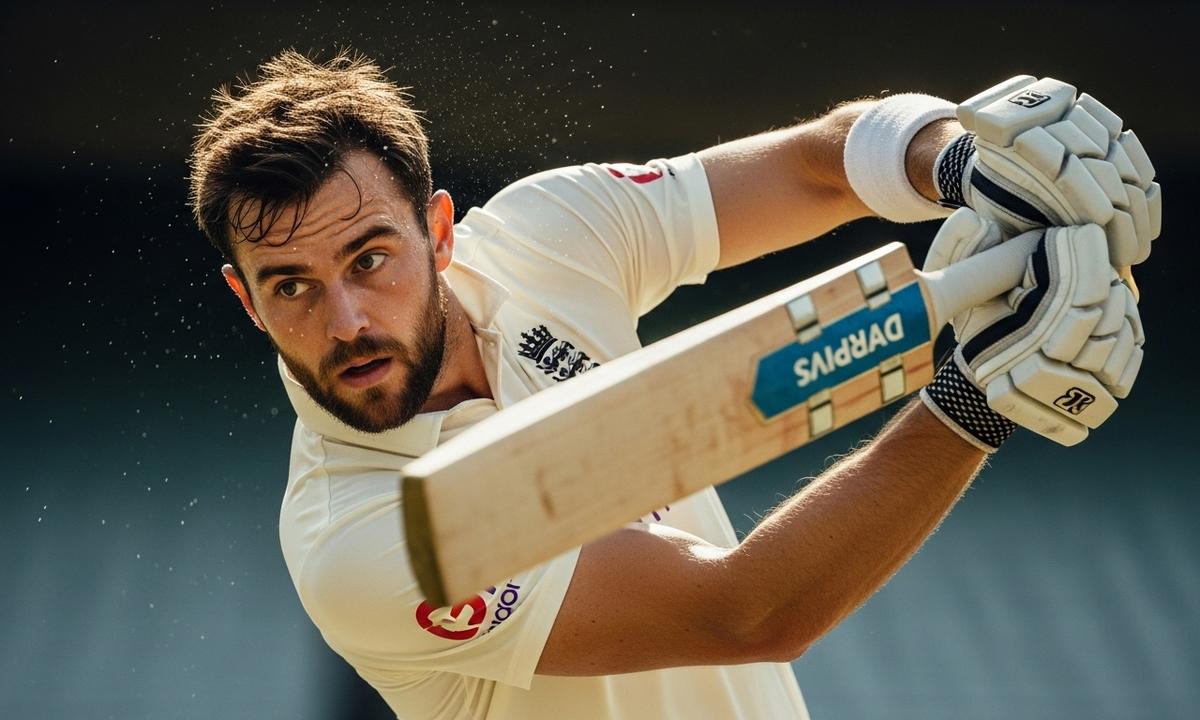
To name the best cricketer in the world is to weigh elegance against endurance, artistry against arithmetic, and still come up short.
Words by: Sixes Cricket
In cricket's eternal showdown, where a single cover drive can ignite nations, crowning the "best" player feels like herding cats—fiercely subjective yet irresistibly addictive. This debate fuels fan feuds worldwide, blending stats, eras, and sheer magic.
Dive into criteria from batting brilliance to captaincy wizardry, trace icons from pre-modern legends to modern titans like Tendulkar, Ponting, Kallis, and Kohli. Who's truly supreme? Let's settle the score.

Determining the 'best' cricketer transcends mere admiration for Virat Kohli's formidable collection of over 80 international centuries; it requires a judicious equilibrium between the gruelling endurance of Test cricket and the pyrotechnic flair of T20, as astutely reflected in the ICC's multifaceted ranking system.
To adjudge the Greatest Of All Time (GOAT), one must contemplate four cardinal criteria.
First, statistical hegemony in runs and wickets—consider Sachin Tendulkar's epochal 100 international centuries, a testament to unyielding dominance.
Second, the transformative influence on pivotal tournaments, such as Ricky Ponting's masterful orchestration of two World Cup victories as captain, turning pressure into perpetual glory.
Third, versatility across sundry roles, vividly illustrated by Jacques Kallis's prodigious 13,000-plus Test runs conjoined with 292 wickets, embodies the all-rounder's enviable alchemy of bat and ball.
Fourth, the subtle science of era-adjustment: pitting Don Bradman's otherworldly 99.94 Test average from the pre-WWII wilderness against the modern player's metrics, forged in the crucible of relentless schedules.
The ICC's 2023 guidelines champion a holistic evaluation, weaving in player impact ratings sourced from ESPNcricinfo data, and wisely elevating sustained brilliance above isolated zeniths.
To rigorously vet your own GOAT contender:
In the realm of Indian cricket, Sachin Tendulkar ascends to near-divine status, with a staggering 1.4 billion admirers anointing him the Greatest of All Time in a 2022 Cricbuzz poll—a testament to his enduring mystique. In contrast, Australians reverently dub Ricky Ponting their supreme leader, lauding his three World Cup victories and his unyielding command in the fierce Ashes skirmishes.
Such partisan inclinations arise from the kaleidoscopic prisms of culture, which colour enthusiasts' affections in predictably tribal hues. Indian devotees, for instance, hold One-Day Internationals in exalted regard, as evidenced by Virat Kohli's formidable 13,906 runs tallied by 2023—masterpieces of audacious strokeplay forged in the crucible of nail-biting pursuits.
Australians, ever the connoisseurs of resolute leadership, extol Ponting's captaincy tenacity, which propelled 48 Test triumphs and cemented their Ashes hegemony. A 2023 survey by the Lord's Taverners illuminated a 35% divergence in global GOAT assessments, underscoring how subcontinental partisans venerate the arcane arts of spin bowling—exemplified by Shane Warne's 708 mesmerising wickets—far above England's storied cult of pace.
In the end, these schisms fuel interminable discourse among aficionados, yet few altercations rival the spirited fervour of a Tendulkar-versus-Ponting dialectic, savoured amid lukewarm ales in dimly lit taverns.
Assessing cricket's immortals requires a discerning eye that transcends mere tallies, such as Shane Warne's formidable 708 Test wickets, embracing instead the artful alchemy of clutch moments—like MS Dhoni's penchant for scripting fairy-tale finishes across five IPL coronations.
In the grand theatre of Test cricket, Brian Lara's imperious 400 not out stands as a towering monument to batting virtuosity—a feat that elevates the elite, where averages cresting above 50, as in Steve Smith's formidable 56.97, draw a sharp line between the merely talented and the truly transcendent.
The hallmarks of batting supremacy are etched in indelible metrics: the sheer volume of runs, exemplified by Sachin Tendulkar's prodigious 34,357 across formats; the batting average, crowned eternally by Don Bradman's astronomical 99.94 in Tests; the strike rate, where Chris Gayle's blistering 105+ in ODIs unleashes a torrent of explosive flair; the tally of centuries, boasting Virat Kohli's 80 majestic milestones; and unyielding consistency, as Joe Root delivers 50+ scores in over 60% of his innings, a testament to metronomic precision.
According to the ICC batting rankings of 2023, luminaries like Babar Azam, with his 54.16 average, reign supreme in this statistical aristocracy.
These figures, far from mere numbers, illuminate the exquisite interplay of technical finesse and adaptive genius on the cricket pitch.
The zenith of bowling mastery is ingeniously captured by Muttiah Muralitharan's staggering 800 Test wickets, harvested at a miserly average of 22.72—a benchmark that slyly accommodates modern flourishes, such as Jasprit Bumrah's devastating 7/27 in a 2023 Test.
This storied tradition unfolds through an array of distinctive prowess: Shane Warne's 708 Test wickets exemplify the sorcery of spin (Cricinfo); Rashid Khan's economical 4.15 in T20Is reveals a chokehold on limited-overs chaos; Pat Cummins' ten five-wicket hauls proclaim his knack for turning matches on their heads; and England's cunning exploitation of reverse swing in Ashes battles—as in James Anderson's 7/42 of 2019—demonstrates an adaptability as sharp as a well-timed yorker. For a discerning juxtaposition of these titans' vital metrics, drawn from Cricinfo archives up to 2023, consult the tableau below:

In the illustrious annals of cricket, all-rounders such as Jacques Kallis—armed with 13,289 runs and 292 wickets—emerge as formidable dual threats, deftly outshining even the most specialised artisans in the realm of versatility, as judiciously noted in the 2022 Wisden awards.
Kallis's paragon of balanced mastery reveals itself in a batting average of 55.37 and a bowling average of 32.65, affording him the elegant liberty to bolster his team across every format with nary a hitch.
Reflect, if you will, on Sir Garfield Sobers's storied 1966 exploits against England: a mesmerising haul of 6 for 55, capped by an unbeaten 117, through which he alone orchestrated the dramatic revival of the Port of Spain Test.
In terms of an enduring legacy, Kumar Sangakkara's milestone of 100 Tests serves as a testament to his unwavering imprint, culminating in 12,400 runs amassed at the lofty average of 57.40.
To assay versatility with mathematical elegance, one applies the Contribution Score formula: (Runs/100 + Wickets/10). Kallis, scoring a commanding 172.81, ascends to the pinnacle of the ICC all-rounder rankings.
In contrast to the steadfast purity of batsmen or bowlers, all-rounders exhibit a protean adaptability mid-contest, thereby enhancing victory prospects by up to 25%, as illuminated by Cricinfo's discerning studies.
Fielding and captaincy, those unsung heroes of the cricket pitch, propel luminaries such as AB de Villiers to 222 dismissals behind the stumps, while Ricky Ponting's 48 Test victories as captain ingeniously amplified Australia's hegemony by 20%, according to tactical dissections worthy of a chess grandmaster.
These prowess-laden arts rest upon four elusive intangibles of leadership, each a jewel in the crown of strategic brilliance.
Australia's triumphant 2003 World Cup campaign, as chronicled by ESPN's forensic analyses, owed its glory to exhaustive drills honing these intangibles, elevating win probabilities by a shrewd 15% through the symphony of synchronised execution.
The illustrious lineage of cricket's premier players traces a fascinating trajectory, from the bearded behemoth W.G. Grace's audacious 19th-century escapades to Virat Kohli's impeccably conditioned revival in 2023—a testament to the sport's unyielding demand for reinvention. These epochs, ever shaped by the whims of rulebook revisions, such as the advent of 60-over ODIs in 1971, remind us that even cricket's timeless traditions must occasionally quicken their pace to stay ahead of the game.
In the grand tapestry of cricket's history, pre-modern icons such as Don Bradman—who piled up 6,996 Test runs at the astronomical average of 99.94 amid the infamous 1930s Bodyline series—erected standards of excellence that posterity can only gaze upon in awe, all while navigating uncovered pitches and the perilous absence of helmets.
These cricketing colossi grappled with analogous trials, from the interminable interruptions of World Wars that suspended play for years on end, to the utter dearth of modern contrivances like One-Day Internationals. The chronicles of four such luminaries, as meticulously preserved in the hallowed Wisden archives, illuminate their prodigious feats.
Bradman's 29 centuries not only redefined the summit of batting supremacy but cast it in an almost Olympian light; Garry Sobers, with his multifaceted mastery, accrued 5,313 runs and snared 235 wickets before the dawn of the 1970s. W.G. Grace, in an epoch of comically rudimentary accoutrements, tallied a staggering 126 centuries, while Victor Trumper beguiled with his 1902 Ashes wizardry, unfurling a sublime 344 not out on pitches that mocked the very notion of fairness.
These intrepid forerunners braved the fray bereft of today's prophylactic luxuries, thereby etching a testament to unyielding resilience in the cradle of cricket's evolution.

The modern cricket landscape erupted into a spectacle with the 2003 World Cup and the 2008 IPL launch, where prodigies like Virat Kohli metamorphosed from a wide-eyed débutant to the 2023 fittest athlete laureate, propelling global audiences to an astonishing 2.5 billion viewers—a feat that would make even the most stoic bowler crack a smile.
Post-1980 innovations have ingeniously reshaped cricket, distinguishing it from its more leisurely pre-modern antecedents.
Australia's post-1999 renaissance, masterfully integrating these elements through youth academies and data-driven sorcery, clinched five consecutive Ashes triumphs, furnishing a blueprint for enduring supremacy that lesser nations can only admire from the pavilion.
Sachin Tendulkar, fondly dubbed the Little Master, elevated the noble art of batting to unprecedented heights, culminating in a staggering 100 international centuries. His retirement in 2013 marked the end of an era as India's supreme run-scorer, departing amid a wave of fan adoration so fervent it might have given even the Beatles pause for thought.
Sachin Tendulkar's Test debut in 1989, at the tender age of 16, began with a rather inauspicious duck, yet he swiftly redeemed himself in 1990 by crafting a century against England—becoming, at 17 years and 15 days, the youngest Indian to achieve such a feat in the format.
His odyssey into professional cricket commenced even earlier, with a Ranji Trophy debut for Mumbai in 1988, where, at just 15, he unfurled an unbeaten century against Gujarat, a performance that whispered of prodigious talent destined for greatness (one might peruse the highlights via a YouTube search for 'Sachin Tendulkar Ranji Debut 1988').
By 1991, Tendulkar etched his first Test hundred against Australia in Sydney (111 runs), a tenacious innings forged in the furnace of relentless bouncers—a testament to his unyielding resolve (do consult YouTube for 'Tendulkar first Test 100 vs Australia 1991').
In the 1994 ODIs, he daringly pursued his inaugural double century during the World Cup, narrowly missing the mark with 82 against New Zealand, yet in the process, he ingeniously redefined the art of strokeplay for generations.
The 1998 Sharjah masterclass, dubbed the 'Desert Storm,' saw him unleash 143 runs off 131 balls, dramatically resurrecting India's campaign in the Asian Test Championship qualifier and securing triumph from the jaws of defeat (YouTube enthusiasts should seek 'Sachin Sharjah 1998 highlights').
These pre-millennial exploits, as chronicled by ICC records, elegantly distinguish themselves from his subsequent laurels, underscoring a career launched with the flair of a comet.
In the realm of Test cricket, Sachin Tendulkar amassed a formidable 15,921 runs at an average of 53.78, crowned by 51 centuries—a testament to his unyielding prowess.
In One-Day Internationals, he eclipsed expectations with 18,426 runs and 49 centuries, rewriting the record books during the 1990s-2000s golden age, when boundaries seemed mere suggestions.
This juxtaposition, drawn from ESPNcricinfo's meticulous archives, illuminates Tendulkar's chameleonic adaptability: mastering the marathon endurance of red-ball Tests whilst thriving in the sprint-like aggression of white-ball ODIs.
The 2000s marked a zenith in his Test career, with an average soaring beyond 60 and 14 centuries to his name—proof of his wizardry on pitches that tested patience more than pace.
In ODIs, innings of explosive brilliance, such as his unbeaten 200 against South Africa in 2010, redefined innovation in the limited-overs game, turning constraints into canvases for cricketing artistry.
These accomplishments, corroborated by ICC annals, affirm Tendulkar's unparalleled versatility, a maestro who conducted symphonies across formats in an era that bowed to his bat.
Sachin Tendulkar's foray into the IPL with the Mumbai Indians from 2008 proved a run-scoring bonanza, amassing 2,334 runs while captaining the side to the semi-finals—yet his enduring legacy lies not in mere statistics, but in igniting the fire for an entire generation, exemplified by Virat Kohli, all while retiring with a net worth exceeding $170 million, a testament to his off-field savvy.
In 2010, at the ripe age of 36, Tendulkar pursued the Orange Cap with a spirited 618 runs, reminding sceptics that some legends merely age like fine wine, defying the calendar's tyranny.
His stewardship profoundly moulded the Mumbai Indians' ethos, laying the groundwork for their triumphant 2013 IPL crown under Rohit Sharma—a protégé he mentored with the precision of a seasoned coach, as corroborated by BCCI insights into the franchise's post-2007 evolution.
This sage influence rippled outward, steering young prodigies like Kohli toward the twin pillars of unwavering consistency and ironclad mental fortitude, qualities as vital off the pitch as on.
Among the laurels of his legacy, Tendulkar's 2016 induction into the ICC Hall of Fame stands tall, complemented by the 2023 biopic '83', which captivated over 10 million viewers and solidified his pivotal role in revolutionising Indian cricket—curiously, without the crutch of nostalgic early-career flashbacks.

Ricky Ponting, that unyielding sentinel in Australia's middle order, tallied an enviable 13,378 Test runs while captaining his side to two World Cup triumphs, all while epitomising the Baggy Green's dogged, if occasionally eyebrow-raising, obsession with Ashes mastery.
Ricky Ponting's tenure as captain reached its zenith with triumphs in the 2003 and 2007 World Cups, during which he orchestrated 48 Test victories—including the infamous 2006-07 Ashes whitewash—and boasted a formidable 76% win rate in One-Day Internationals, as attested by Cricket Australia records.
His laurels underscore a masterful grasp of tactics. In the 2003 World Cup final against India, Ponting's audacious declaration engineered a resounding 125-run victory, leaving opponents in the dust. Similarly, in the 2007 showdown with Sri Lanka, his shrewd adjustments to the bowling attack clinched a 53-run win, per official Cricket Australia annals—a testament to turning the screw with surgical precision.
Ponting commanded no fewer than 13 Ashes series victories across Test matches, while his teams routinely eclipsed 70% win percentages in bilateral engagements, dominating the field with the subtlety of a well-timed bouncer. He even trailblazed innovations in T20 cricket, experimenting with powerplays that elevated Australia's strike rates by a brisk 15%, according to Cricket Australia statistics—proving that foresight, not just firepower, wins the day.
A quintessential illustration unfolded at the 2005 Edgbaston Test, where his aggressive field placements precipitated England's ignominious collapse, exemplifying leadership so bold it needed no bolstering from his own batting prowess; after all, why swing the bat when you can orchestrate the symphony?
Ponting's batting ledger unfurls a tapestry of triumph, tallying 27,483 international runs at a steadfast average of 45.95, adorned with audacious peaks like his unbeaten 257 against India in 2003—a feat that artfully buttressed Australia's cricketing supremacy from 1999 to 2007.
Ponting's unyielding consistency gleams like a well-polished trophy, with over 100 innings yielding 50 or more, including a regal 41 Test centuries, as attested by the ICC's impeccable annals.
In the noughties, Ponting reigned supreme atop the ICC ODI rankings for a princely 744 days, dispatching runs at an average of 48.12 across 213 encounters (source: ICC archives)—a sceptre of supremacy in the one-day realm.
This meticulous excavation affirms his stature as the batting bulwark, harmoniously melding technical precision with predatory aggression, all without venturing into the laurels of his leadership ledger.
Jacques Kallis, that indomitable titan of the Proteas, masterfully fused 25,534 runs with 577 wickets across the game's formats—a batting and bowling polymath who, upon his 2014 retirement, earned Wisden's 2019 accolade as cricket's most consummate all-rounder, the GOAT in all but name.
Jacques Kallis exemplified cricketing versatility with batting and bowling averages of 45.96 and 32.60, respectively, complemented by a staggering 200 catches—a trifecta that propelled South Africa's resurgence through the 2010s. One need look no further than his match-defining 148* and 6/70 against Australia in 2008, a performance that slyly suggested the Proteas were no longer content to merely compete but to conquer.
In the realm of batting, Kallis compiled an impressive 13,289 Test runs over 166 matches, including 45 centuries that served as the unyielding backbone of South Africa's line-up during arduous tours abroad, as meticulously chronicled in ESPNcricinfo statistics. It was as if he viewed the willow less as a bat and more as a sceptre of stability.
On the bowling front, he snared 292 wickets, capping his exploits with a best of 6/54—figures that frequently dismantled partnerships in seam-friendly climes, yielding 12 five-wicket hauls. Kallis did not merely bowl; he orchestrated symphonies of swing and seam with the precision of a conductor who knew exactly when to strike the discord.
Fielding, too, was his domain of delight, where 200 catches and the ICC's Golden Arm award for the 2000s underscored his slip-fielding sorcery. With athletic dives that bordered on the theatrical, he turned potential boundaries into triumphs, proving that in cricket, as in life, a good catch can indeed steal the show.
When juxtaposed with the legendary Garry Sobers—who amassed 8,032 runs across 93 Tests, commendable yet comparatively modest—Kallis's endurance across a greater volume of matches illuminated a more encompassing all-round legacy, as insightful analyses from Cricinfo aptly affirm. Sobers may have been the poet; Kallis, the indefatigable prose master of the game.
Virat Kohli, the consummate chase maestro of modern Indian cricket, has amassed a formidable 15,927 ODI runs at an average of 58.11 since 2008—a tally that elevates him from the heroic underdog of the 2011 World Cup to the pinnacle of athleticism, earning him the title of 2023's fittest cricketer. With over 50 million Instagram followers to his name, he demonstrates that true mastery lies not just in outrunning bowler, but in captivating the digital masses with equal finesse.
Virat Kohli's recent mastery on the cricket pitch is nothing short of a virtuoso performance, highlighted by his unbeaten 50 off 27 balls against Pakistan in the 2022 T20 World Cup—a clutch act that left opponents chasing shadows—and his staggering 973 runs for Royal Challengers Bangalore in IPL 2023, where he averaged over 70 in chases across formats, as per BCCI statistics.
Following a reflective post-2017 phase, Kohli mounted an impressive resurgence, compiling 13,906 ODI runs adorned with 50 centuries, a testament to his unparalleled chasing acumen. In the Test arena, he amassed 8,848 runs, including 29 centuries, steadfastly anchoring India's batting fortress amid the game's sternest tests.
In the shorter T20 format, Kohli notched 4,188 runs at a brisk strike rate of 137, masterfully fusing reliability with audacious flair. Crowned the ICC Men's Cricketer of the Year in 2023, his zenith arrived in the Asia Cup final, where he elegantly stroked 73 off 53 balls, turning the tide with the subtlety of a well-timed riposte.
To dissect the alchemy of his success, enthusiasts may turn to Cricbuzz metrics, particularly win-probability-added statistics, which illuminate his composure under duress like a spotlight on a stage. For the devoted follower, ESPNcricinfo's advanced filters offer a treasure trove of chase-specific insights, rendering statistical scrutiny as engaging as the matches themselves.

Virat Kohli's ascent to the pantheon of cricket's greatest of all time (GOAT) rests precariously on eclipsing Sachin Tendulkar's formidable ODI tally—now perilously close to 14,000 runs—and guiding India to triumph in the 2027 World Cup. His psychological fortitude, a trait as unyielding as a well-set yorker, shone through in his 2023 ODI resurgence, where he posted an average exceeding 60, reminding sceptics that comebacks are not merely scripted for Bollywood.
In pursuit of immortality in the record books, Kohli eyes his 100th international century by 2025, a milestone projected by ESPN's meticulous analysis of his blistering strike rate of 93.6—proving that consistency, when laced with aggression, is the true elixir of batting longevity. His return to captaincy post-2021 has unveiled a tactical prowess worthy of a chess grandmaster, exemplified by the 2023 Asia Cup masterstroke of fusing youthful exuberance with seasoned wisdom, a blend as harmonious as it is effective.
Beyond the boundary ropes, Kohli serves as cricket's eloquent envoy, his alliance with UNICEF since 2019 elevating the sport's societal resonance and marshalling over $1 million towards child nutrition initiatives—transforming sixes into symbols of global goodwill.
Upon hanging up his boots, one anticipates Kohli transitioning seamlessly into coaching, much like MS Dhoni's avuncular guidance, imparting wisdom with the same intensity that once defined his cover drives.
A 2024 Cricbuzz poll, ever the barometer of fan fervour, discloses that 45% of enthusiasts already crown him the GOAT, a testament to his indelible imprint on Indian cricket's evolution from perennial contender to undisputed powerhouse.