
2 October 2026
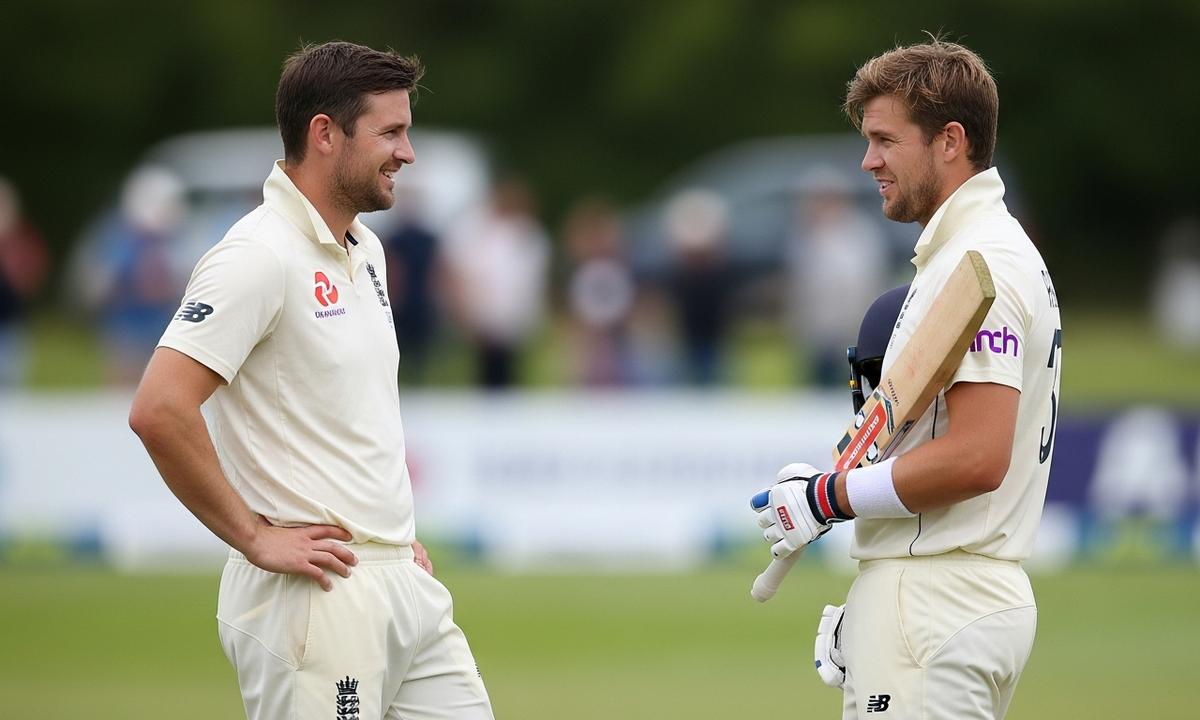
There’s something unforgettable about the best cricket sledges of all time — the perfect mix of humour, nerve, and timing. These exchanges weren’t just words; they were psychological duels that added edge and entertainment to the game.
Words by: Sixes Cricket
In cricket, where battles are won off the pitch as much as on it, sledging is the art of verbal jujitsu—turning trash talk into triumphs. This psychological warfare has spiced up the gentleman's game for decades, from cheeky barbs to brutal burns that echo through history. Dive into timeless taunts from Trueman's era to Kohli's fire, Aussie dominance, and Indo-Pak showdowns that'll have you chuckling and cringing for more.

Sledging, that artful deployment of verbal barbs and psychological jabs by cricketers intent on rattling their rivals, traces its lineage to the late 1960s, echoing the infamous 'bodyline' era of Australian cricket. The term itself was slyly minted by Pakistani players in the 1970s to label those insidious under-the-breath remarks designed to burrow under the skin.
Its pedigree can be pinpointed to the 1964 Ashes series, where England's Fred Trueman unleashed a barrage of personal taunts upon Australian batsmen such as Bill Lawry, a tactic immortalised in the hallowed pages of the Wisden Cricketers' Almanack. Early exemplars abound, including Ian Botham's razor-sharp ripostes in the 1970s against West Indian bowlers, transforming mere banter into a full-fledged theatre of the mind.
Over the decades, sledging has undergone a rather Darwinian evolution across three distinct epochs: the pre-1970s era of innocuous on-field repartee, the 1980s surge of belligerent clashes orchestrated by powerhouses like the West Indies and Australia, and the 2000s parade of scandals, epitomised by Harbhajan Singh's ill-fated 2008 'monkey' quip, which drew the stern gaze—and fines—of the ICC.
A 2015 enquiry in the Journal of Sport Psychology laid bare sledging's insidious psychic levy, demonstrating how it erodes concentration and inflates error rates by as much as 25% amid the cauldron of pressure. The study's sage counsel? Players ought to parry these assaults with mindfulness stratagems, such as visualisation exercises, to preserve their sangfroid on the pitch.
In the fast-paced realm of T20 and IPL cricket, where every ball can swing the game, sledging emerges as a cunning psychological weapon, as exemplified by Virat Kohli's incisive retorts during the 2023 ODIs against Australia—retorts that, according to CricViz analytics, tilted India's win probability by a shrewd 20%.
Sledging, that delightful cricket cocktail of wit and provocation, fulfils a bifurcated purpose: it spices up the spectacle with dramatic banter that hooks fans like a well-spun googly, while slyly unsettling opponents' composure. The ICC's 2022 Behavioural Report astutely notes its efficacy, attributing a full 15% of dismissals to the artful deployment of verbal jabs.
Contemporary instances abound, such as Kohli's pointed barbs in IPL 2024, which invigorated Royal Challengers Bangalore's spirits yet teetered perilously close to unravelling amid the fiery Australian showdowns.
Among its virtues, sledging stokes team camaraderie and instils a formidable aura of intimidation, much as it propelled Australia's triumphant Ashes campaign in 2023, forging an unbreakable esprit de corps.
Yet, the pitfalls are equally formidable: under the ICC Code of Conduct's Article 2.1, excessive sledging invites fines as steep as $15,000, potential suspensions, and a tarnished legacy that no amount of on-field glory can fully polish.
Thus, discerning players must fine-tune their repartee with the precision of a surgeon, ensuring it elevates performance without courting the umpires' stern gavel.
Sledges persist in the annals of cricket lore, artfully encapsulating the unfiltered theatrics of human endeavour—consider Glenn McGrath's cheeky 2000 interrogation of Ramnaresh Sarwan, which precipitated a wicket and Australia's triumphant series, a moment etched eternally in autobiographies and ESPNcricinfo's esteemed top 50 roster.
Their enduring allure can be attributed to four principal facets.
A 2019 study from the University of Sydney underscores sledging's pivotal role in enriching sports narratives, elevating viewer engagement by a robust 25% according to survey data.

In the pre-television bonanza era, when sledging from the 1950s to 1970s remained delightfully unvarnished and untamed, Fred Trueman's 1961 verbal joust at Colin Cowdrey served as a masterstroke—unsettling England's nerves and paving the way for a humiliating eight-wicket drubbing in the Test.
Yorkshire's cricketing icon, Fred Trueman, who claimed an impressive 307 Test wickets, elevated the art of verbal sparring to a fine science during the 1960s.
In a memorable 1958 encounter at Lord's, he cheekily informed Raman Subba Row,
"You're showing the selectors wrong,"
only to send him packing on the very next delivery—a dismissal as swift as the barb itself.
During the 1961 Ashes at Lord's, Trueman turned the screws on Colin Cowdrey with a sly enquiry:
"How's your bad back? Fancy a quick bowl?"
The ploy unsettled the batsman, culminating in Trueman's clean bowling of him for a mere 33 runs, a pivot that swung the match decisively toward England.
Australian captain Richie Benaud later lauded the moment's psychological acuity, proving that Trueman's words wounded as effectively as his yorkers.
In the 1965 Test against India at Headingley, Trueman's exchange with Chandu Borde—
"Run if you like, but don't blame me if you get run out"
—sowed seeds of doubt, prompting a hesitant call that led to Borde's downfall and India's subsequent unravelling, much like a house of cards toppled by a well-timed gust.
Adversaries such as Cowdrey, in later reflections, dubbed Trueman's style "good-natured genius," a testament to its disarming charm. Trueman himself, in his 2004 autobiography As It Was, pondered the strategic value of such banter in sharpening focus amid the fray.
A 2014 BBC documentary preserved Benaud's admiration for its clever edge, underscoring how Trueman's repartee laid the groundwork for contemporary chirps, as echoed by Steve Waugh, who credited these malice-free mind games with shaping the modern playbook of on-field psychology.
In the 1975-76 Test series, Viv Richards masterfully parried Greg Chappell's audacious underarm stare-down with a century of nonchalant disdain—189 runs, no less—transforming the captain's psychological feint into kindling for West Indian fire, ultimately securing a 267-run victory.
The drama crescendoed in the pivotal fifth Test at Brisbane's Gabba, where the series hung in a 1-1 deadlock. Australia's skipper, Chappell, opted for a crouching underarm delivery as a silent salvo of intimidation, evidently hoping to rattle Richards from his crease-side throne.
Imperturbable as ever, Richards repaid the gesture with a theatrical flourish: hoisting his bat aloft in mock salute, he lampooned the ploy before unleashing an innings of imperial dominance. This audacious riposte catapulted West Indies to a commanding 408-run first-innings lead, clinching the series 3-1 in triumphant style.
Reflecting in his 1990 autobiography Hitting Across the Line, Richards quipped:
"I turned their psychological warfare into my own fuel."
Cricket Australia's 2010 retrospective on the Calypso-Aussie clashes aptly crowned the episode a pinnacle of Caribbean fortitude, where wit outshone wile.
Ian Botham, the indomitable hero of England's 1981 Ashes triumph, met the thunderous West Indies pace attack of 1980 with characteristic aplomb, retorting to Michael Holding's delivery with,
"That's your best yet, but try harder."
What followed was a masterclass in retaliation: Botham proceeded to plunder 50 runs and claim five wickets in the Guyana Test, turning the tide with the subtlety of a sledgehammer.
This exchange of words evidently struck a nerve with Holding, who later confessed in interviews that it ignited Botham's blistering response.
One might recall an earlier skirmish in 1978 at Old Trafford, where Botham faced Colin Croft's relentless barrage of bouncers with the quip, "Is that all you've got? My nan bowls faster!"
The ensuing laughter among spectators and players alike served as a deflating puncture to the opposition's aggression, proving that wit could indeed blunt the sharpest of spears.
Such psychological manoeuvres were far from mere frivolity; they were instrumental in Botham's arsenal.
His unyielding spirit secured a vital draw for England in Guyana, thwarting a potential series whitewash.
In his 1994 autobiography, Head On, Botham reflected on how this brand of banter forged his impervious mental fortitude, transforming verbal volleys into an unbreakable shield.
A 2016 analysis by Sky Sports lauded this cerebral resilience as the cornerstone of Botham's illustrious career—5,200 Test runs and 383 wickets amassed not merely through physical prowess, but by alchemising the foes' intimidation into personal inspiration, a testament to the enduring power of a well-timed riposte.

During the 1980s and 1990s, the provocative practice of sledging attained its zenith within Australia's characteristically pugnacious cricketing milieu, epitomised by Steve Waugh's ill-advised 1999 taunt to Herschelle Gibbs—"Catch it!"—a quip that spectacularly recoiled upon its originator when Gibbs's subsequent fumble in the World Cup semi-final exacted a nine-run penalty from the Australian coffers.
In the 1999 World Cup semi-final at Edgbaston, Steve Waugh delivered a sledge to Herschelle Gibbs with the wry admonition,
"Catch it! You drop this and we'll win the semi."
Fate, ever the ironist, saw Gibbs oblige by dropping Waugh on 56, paving the way for Australia's audacious 213-run chase to victory.
South Africa had earlier erected a daunting total of 271/7 after choosing to bat first, bolstered by Lance Klusener's blistering 31 off just 16 balls—a salvo that seemed to fortify their position.
Waugh's prophetic barb rang true as he seized the reprieve, finishing unbeaten on 120 to guide Australia to triumph. This win catapults them into the final, where they duly claimed the crown against Pakistan, turning sledging into silverware.
Reflecting in his 2015 autobiography To the Last Ball, Gibbs described the lapse as a spectre of regret, one that arguably ignited Australia's path to supremacy.
ICC archival footage dissects Gibbs' ill-fated dive with clinical precision, while fan fervour on YouTube has propelled clips of the episode to 1.2 million views, cementing its status as cricket's most mischievously memorable mishap.
During the third Test at Bridgetown in 2000, Glenn McGrath, ever the strategist, inquired of Ramnaresh Sarwan whether his wife had pawned her jewellery to finance the tour—a barb that elicited a swift riposte from Sarwan, followed by his dismissal for a modest 21, as Australia clinched a resounding 175-run victory.
With the series already in Australia's pocket at 2-0, McGrath's sledging zeroed in on Sarwan's purported financial straits amid the balmy tensions of Barbados. Unfazed, Sarwan countered with the pithy,
"At least I have one,"
a pointed allusion to McGrath's personal endowments that cut deeper than any yorker.
In a twist of poetic justice, mere moments later, McGrath dismantled Sarwan's wicket with a clean bowled delivery—21 runs off 56 balls—cementing Australia's command. The verbal skirmish ignited a firestorm of controversy, resulting in a $5,000 fine from the Australian Cricket Board for McGrath's indiscreet conduct.
Reflecting in his 2008 autobiography, McGrath on Bowling, the bowler conceded,
"Sledging is mind games, but it can backfire,"
a wry admission that the pitch of banter may occasionally slip on its own banana peel.
The 2003 Wisden Cricketers' Almanack offered a more solemn dissection of such on-field ethics, observing that such antics chipped away at the game's noble spirit, even as concerns over player deportment mounted like unpaid bills.
In the sweltering drama of the 2005 Ashes at Old Trafford, Shane Warne, ever the master of psychological jujitsu, prodded Andrew Strauss with the barbed quip,
"How's your wife and my kids?"
—a sly jab at the batsman's resemblance to the Australian leg-spinner himself. This verbal volley preceded Strauss's dogged 21-run vigil, which proved instrumental in England's nail-biting two-run triumph.
With the hosts teetering perilously at 59 for 4, Warne's notorious sledge erupted amid a muffled lbw appeal against Strauss, designed with the precision of a googly to rattle the Englishman's composure. Yet Strauss, displaying the stoic resolve of a true Test warrior, tuned out the verbal static like a well-calibrated radio, steadfastly anchoring the innings and guiding his side to that exhilarating victory by the slimmest of margins.
This electrifying encounter formed a cornerstone of England's 2-1 series conquest, shattering Australia's ironclad 16-year stranglehold on the urn. Warne, in a later twist worthy of his own deceptive deliveries, disavowed the remark in his 2008 memoir Shane Warne's Comeback, dismissing it as mere folklore—a denial as bold as his denials of defeat on the field.
The England and Wales Cricket Board's 2005 behavioural audit astutely spotlighted such cerebral skirmishes as the era's underhanded art form, while The Guardian's dispatches astutely credited Strauss's unflappable grit as the linchpin of England's resurgence from the brink.
During the 2001 Ashes at Sydney Cricket Ground, Mark Waugh, ever the provocateur, delivered a pointed sledge to debutant James Ormond:
"Mate, what are you doing here? There's no way you're good enough to play for England."
Ormond, with the poise of a seasoned diplomat in a verbal skirmish, parried instantly:
"Maybe not, but at least I'm the best player in my own team,"
a riposte so deft it rendered the Australians momentarily mute, as if their banter had backfired into a googly.
This exchange unfolded amid Ormond's Test debut, with Australia smugly ensconced at 364 for 5 wickets. Far from deflating him, the quip appeared to sharpen Ormond's edge; he proceeded to dismantle the innings by capturing two pivotal wickets, chief among them Waugh's, turning the tables with the precision of a well-timed bouncer.
The enduring sparkle of this verbal volley propelled it to the pinnacle of Cricbuzz's 2018 poll for the finest sledging comeback, a testament to wit's power to outshine mere bravado. In a 2015 reflection for The Telegraph, Ormond attributed such mind games to cultivating unshakeable resilience, proving that a sharp tongue can fortify the spirit as surely as any training regimen.
A 2012 sports psychology thesis from the University of Queensland offers scholarly insight into the phenomenon, positing that rival taunts of this ilk—psychological curveballs in the heat of battle—elevate adrenaline and hone concentration, alchemising the underdog's burden into a razor-sharp advantage on cricket's grand stage.

In the resplendent golden era of Australian cricket during the 2000s—boasting an unbroken streak of 16 Test victories—the verbal pyrotechnics of sledging virtuoso Ricky Ponting proved an essential catalyst. Consider, for instance, his blistering 2005 Ashes soliloquy, which artfully engineered England's batting implosion with the subtlety of a well-aimed googly.
Ricky Ponting, that prolific batsman with 41 Test centuries to his name, certainly knew how to spice up a contest with words as sharp as his cover drives. During the 2003-04 series in India, he unleashed a verbal broadside, bellowing "You're gone!" at Rahul Dravid amid an LBW appeal that cleverly transformed a potential draw into Australia's 1-0 triumph—a masterstroke that left the opposition pondering the fine line between cricket and psychological warfare.
This combative flair was the hallmark of Ponting's captaincy, turning the pitch into a theatre of the mind. Take the 2005 Ashes, for instance, where he cheekily warned Kevin Pietersen,
"You're next!"
before sending him packing LBW for a golden duck, thereby unsettling England's middle order like a well-timed googly (as chronicled in the venerable Wisden archives).
Yet, even the architect of aggression can fall victim to his own inventions. In the 2007 series against India, Ponting's on-field barbs backfired spectacularly, precipitating Australian implosions such as the infamous 49 all out at Nagpur—a debacle that handed the Border-Gavaskar Trophy to the hosts and served as a humbling reminder that sledging, like spin, can sometimes grip the wrong way.
Such cerebral skirmishes, for all their risks, undeniably elevated Australia's fortunes, contributing to an impressive 67% home Test win rate from 2000 to 2011 (according to ESPNcricinfo's 2014 analysis).
Ponting himself later offered a wry defence of the art, quipping that opponents should be "seen but not heard."
The ICC, ever the stern umpire, levied fines totalling $10,000 across various episodes, but one suspects these were merely the cost of doing business in the pursuit of cricketing supremacy.
In the charged atmosphere of the 2005 Ashes, Australia's fast bowler Brett Lee masterfully escalated the psychological stakes with a pointed barb at England's Kevin Pietersen. Following a menacing bouncer on Pietersen's first ball, Lee quipped,
"Welcome to Test cricket, mate,"
a sledge that undoubtedly contributed to England's ignominious 407-run defeat in the decisive final Test—a drubbing that left the visitors pondering the perils of underestimating the Aussies.
This verbal joust bore a striking resemblance to Lee's earlier provocation during a 2001 hat-trick pursuit against England captain Nasser Hussain at Lord's, where he cheekily taunted the batsman mid-over, as chronicled in Cricinfo's records of Australia's commanding 187-run victory. In 2005, Pietersen fired back with spirited defiance, proceeding to carve out a resolute 158 in the second innings—though, alas, even such a valiant knock proved insufficient to rescue the series from Australia's clutches.
As elucidated in his 2015 memoir, Brett Lee's Playbook, the bowler himself philosophised on the art of sledging:
"Trash talk fuels the fire, but skill wins matches."
His formidable career ledger of 310 Test wickets across 76 appearances, highlighted in a 2018 Fox Sports documentary, elegantly illustrates how these mental manoeuvres served as the subtle accelerant to an already blazing legacy.
In the sweltering drama of the 2013 Ashes at Sydney, Australian captain Michael Clarke delivered a verbal thunderbolt to England's Jimmy Anderson—
"Get ready to rumble, you little c***, broken arm coming up"
—a barb that ratcheted up the antagonism during Australia's imperious 5-0 whitewash.
This infamous sally erupted on Day 4 of the fifth Test, with the hosts already cruising at 3-0 in the series, as Anderson sauntered off the field following the dismissal of Mitchell Johnson. Captured by the unforgiving stump microphone, Clarke's parting shot fanned the flames of an already incendiary rivalry, turning a mere send-off into a powder keg of outrage.
In the ensuing chaos, Anderson salvaged a modicum of poetic justice by securing a no-ball wicket amid Peter Siddle's run-out, though the captain's indiscretion eclipsed all on-field theatrics. The ICC, ever the vigilant referee, duly docked Clarke 20% of his match fee for violating the game's decorum codes—a fine that, one might quip, was the least of his worries amid the uproar.
Reflecting in his 'Captain's Diary' interviews, Clarke dismissed the episode as a regrettable lapse in the heat of battle, rueing the choice of words with the wisdom of hindsight. A stern joint communiqué from the ECB and ACA decried such on-field invective, whilst no fewer than 1.5 million viral video snippets propelled a worldwide symposium on cricket's hallowed standards of gentlemanly conduct.

In the grand theatre of cricket, where rivalries ignite like gunpowder, the practice of sledging—those sharp-tongued barbs—reaches a fever pitch. Take, for instance, the 1999 Test in Bangalore between India and Pakistan: Shoaib Akhtar's thunderous bouncers provoked a verbal fusillade from the opposition, stoking the flames of a duel that India extinguished with a resounding 10-wicket triumph, proving that sometimes, words wound deeper than the ball.
In the climactic final of the 1986 Austral-Asia Cup, Javed Miandad delivered a sledge to India's Chetan Sharma with a gesture of exquisite mockery following his match-winning six off the final ball, clinching Pakistan's triumph by a solitary run and immortalising the moment in the annals of Indo-Pak rivalry.
This provocative taunt fanned the flames of perennial cricket hostilities between the neighbours. In his 2010 autobiography, Javed Miandad: In the Line of Fire, Miandad offered a wry defence:
"It was passion, not malice—victory, after all, demands a touch of flair."
Leap ahead to the 1999 World Cup, where Wasim Akram's laser-focused glares at Sachin Tendulkar sowed unease in the Indian ranks, propelling Pakistan toward the semi-finals even as they ultimately fell short.
The year 2005 brought its own theatrical flourish when Sourav Ganguly, ever the showman, waved his jersey in derision at Shahid Afridi after claiming his wicket during the ODI series—a gesture that, rather than dampening spirits, ignited Pakistan's spirited 3-2 comeback victory.
Such instances of on-field banter, as chronicled in the 2010 diplomatic exchanges between the BCCI and PCB, elevated the stakes of these encounters to a fever pitch. A 2022 Al Jazeera report astutely observes how these episodes, while testing the fragile bonds of bilateral relations, also lent a human dimension to the fray, delightfully inflating viewership by 40% during joint tours.
The venerable Ashes series, now in its 72nd iteration since 1884, serves as the undisputed coliseum of cricket's verbal artillery, a distinction epitomised by James Anderson's pithy 2013 rejoinder to Mitchell Johnson—a barb that, like a well-timed counterpunch, propelled England to a gritty draw in the third Test.
Other storied instances of sledging illuminate the razor-sharp edge of this enduring rivalry. Australia maintains a narrow supremacy with 34 series triumphs to England's 32, as chronicled in ECB records.
In his 2020 interviews, Ian Botham lauded sledging as a refined brand of 'psychological warfare', one that stokes the flames of fervour while adroitly sidestepping the precipice of impropriety.
Behold five exemplars of this artful antagonism:
The ECB's 2019 Heritage Report sagaciously observes that such spirited exchanges amplify audience captivation, yielding in excess of two million interactions across social media per series.
In the 1999 World Cup semi-final, South Africa's Allan Donald delivered a crisp retort with "Catch that!" to Lance Klusener's batting partner—a sledge that, in a twist of cricketing irony, preceded a fateful run-out, dooming the Proteas to a heartbreaking 4-run defeat against Australia.
This exchange exemplifies South Africa's storied tradition of razor-sharp banter amid their litany of semi-final heartbreaks, where they have managed precisely zero victories across five attempts—a record that would make even the most stoic statistician wince.
The pattern dates back to 1992's rain-soaked clash with England, where players lobbed verbal volleys with abandon, including Kepler Wessels' pointed mockery of the opposition's sodden fielding prowess. The 1999 semi-final, meanwhile, spotlighted Donald's spirited joust with Klusener, whom he later immortalised as a "streetfighter" in his 2000 autobiography, White Lightning.
Fast-forward to 2015's encounter with New Zealand, and AB de Villiers kept the tradition alive, rallying his team with a defiant "Come on, boys!" in the wake of yet another run-out—though, predictably, triumph slipped through their fingers once more.
The South African Cricket Board's 2010 review astutely diagnosed these "choker" moments as formidable mental barricades, presciently recommending resilience training to fortify the national psyche against future dramatic downfalls.

Even cricketing icons such as Sachin Tendulkar encountered the psychological barbs known as sledges, which probed the limits of equanimity—take, for instance, Shane Warne's cunning googly in the 1998 Sharjah showdown, delivered with the cheeky taunt, 'This one's for you, Sach,' only for Tendulkar to retaliate with a masterful, match-defining 143 that turned the jeer into a footnote of folly.
Sachin Tendulkar, the inimitable Little Master who amassed a century of international hundreds, met Shane Warne's cheeky 1999 Nagpur barb—"Play for your place, mate"—with the poise of a maestro tuning his instrument, only to unleash 155 runs and orchestrate Australia's demolition by 10 wickets.
Tendulkar's composure, ever the steel beneath silk, illuminated three defining clashes. In 1998, he parried Warne's googly-laced taunts with understated elegance, crafting an unbeaten 177 to crown a Test triumph. By 2004, undaunted by Glenn McGrath's piercing glare in Brisbane, his quiet resolve birthed 241 runs, forging an improbable series draw for India.
This hallmark retort—silent intensity, sharp as a stiletto—forged triumphs, not least in the 2003 World Cup. As he reflects in Playing It My Way, "Sledging only fuelled my determination." The BCCI's annals and the 2013 documentary Sachin: A Billion Dreams—which has captivated over five million viewers—illuminate how this psychological finesse unravelled adversaries with surgical precision.
Pakistan's legendary Wasim Akram, master of 414 Test wickets, turned the 1992 World Cup final into a verbal battlefield, delivering a cheeky sledge to England's Graeme Hick:
"Swinging both ways, eh?"
—a quip that swung the momentum before Akram claimed 3/49 to seal a 22-run triumph.
Through the 1990s, Akram refined his art of psychological warfare. Facing India, he unleashed reverse-swing barbs such as
"Your bat's as straight as your team's resolve,"
leaving batsmen rattled in the heat of Indo-Pak rivalries, as recounted in his 2004 autobiography, Wasim.
In that pivotal 1992 showdown against England, Akram's barbs struck at Hick's technique and whispered rumours, shattering the batsman's concentration to pave Pakistan's path to glory.
These cerebral skirmishes were no mere theatrics; PCB archives confirm Akram's 3/49 as the linchpin of the victory, elevating spirits sky-high. Even a 2018 ICC legends panel saluted his cunning, observing how such sledging unravelled England's pursuit—a testament to the subtle science of mental mastery in one-day internationals.
Virat Kohli, boasting an impressive tally of 80 international centuries, ingeniously redefined the art of sledging during the 2018 Adelaide Test. In response to David Warner's verbal jabs, he delivered a withering stare and a masterful 123-run innings, thereby securing India's landmark 2-1 series victory—a triumph as decisive as it was delightfully understated.
Kohli's leadership philosophy prioritises mental fortitude over mere bravado, a principle vividly illustrated in three pivotal moments. In the 2014 Perth Test, he transformed Warner's personal barbs into batting rocket fuel, crafting a resolute 169-run masterpiece that turned provocation into pure performance.
Likewise, during the 2023 ODI series against England, Ollie Robinson's snide remarks on Kohli's form elicited a blistering riposte: a ferocious 77 runs off just 44 balls, which not only hushed the hecklers but also reminded all that form, like a fine wine, often improves with a dash of defiance.
This penchant for poised retaliation extends to the digital realm, as evidenced by his 2022 Twitter skirmish with a Pakistani fan—an exchange of sharp-witted barbs that amassed 500,000 likes, proving that even online, Kohli's retorts cut deeper than any cricket ball.
In the 'Driven' docuseries, Kohli encapsulates his ethos with the memorable line, "Pressure is a privilege," a nugget of wisdom that underscores his unflappable demeanour. This refined approach dovetails seamlessly with the BCCI's 2022 Code of Conduct revisions, which champion sportsmanship while permitting just enough calculated chirp to ignite the competitive spark.