
2 October 2026
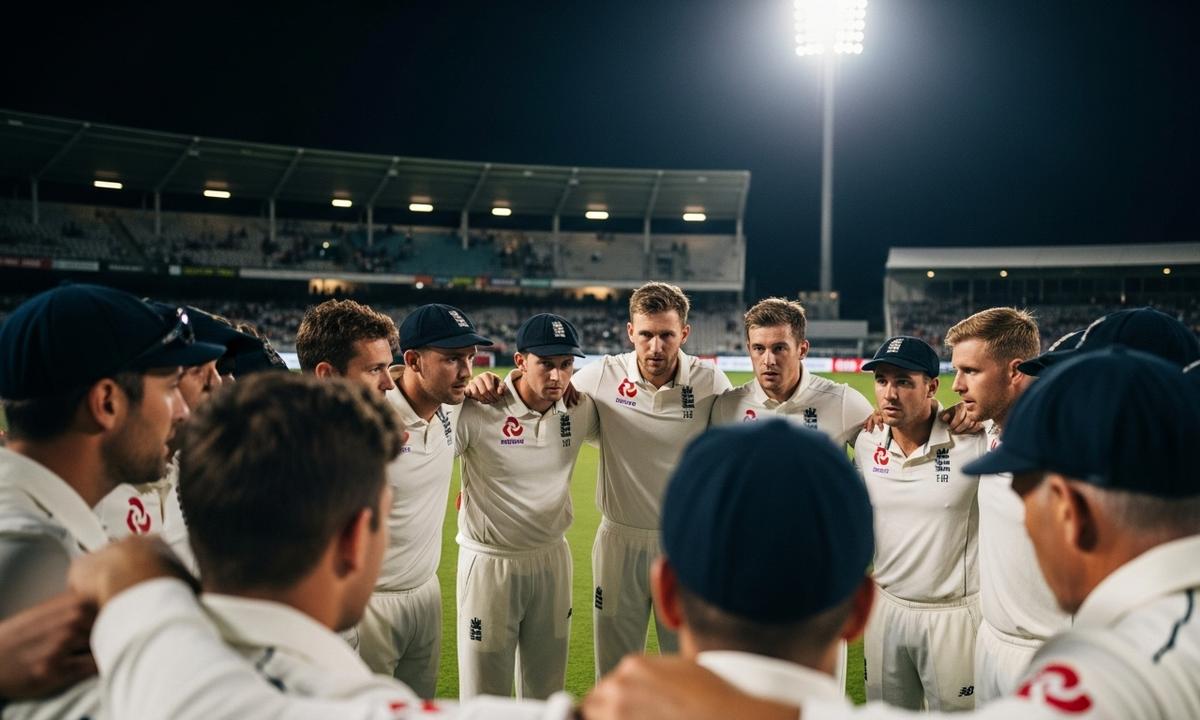
Every cricket fan has an opinion on the best cricket team in the world — but greatness isn’t just about titles. It’s built through dominance, resilience, and those unforgettable performances that remind us why this sport still captures hearts everywhere.
Words by: Sixes Cricket
In cricket's grand theatre, where leather meets willow in epic duels, crowning the "best" team ignites fiercer debates than a boundary-line DRS call.
From Australia's ironclad 90s-00s reign to India's billion-fan surge, we'll dissect golden eras, dissect batting firepower, bowling wizardry, captaincy legends, and tournament triumphs—plus bold predictions on tomorrow's overlords. Who truly holds the urn? Dive in and decide.

The notion of the "best" cricket team transcends mere ICC rankings; it embodies a masterful fusion of Virat Kohli's batting virtuosity and Jasprit Bumrah's bowling intimidation, as vividly illustrated by India's spirited charge to the 2023 ODI World Cup final. To judiciously appraise such supremacy, one must consider four pivotal dimensions.
In aggregate, this cadre assembles a veritable pantheon of superheroes—Kohli channelling the unyielding resolve of Captain America, Bumrah the surgical precision of Iron Man—propelling cricket's allure across international frontiers with effortless panache.
Evaluating cricket teams demands a judicious application of metrics, such as Australia's parsimonious 3.2 bowling economy in the 2003 World Cup or India's stalwart 52.1 batting average across the 2022 T20s, courtesy of Cricbuzz analytics.
To forge a robust evaluation, one must home in on these five discerning criteria, fortified by ESPNcricinfo's 2023 data.
These metrics yield incisive, actionable intelligence, elegantly dismissing biases with data's unerring precision—leaving mere instincts clean bowled and utterly stumped!

Cricket's storied annals are liberally sprinkled with epochs of unchallenged hegemony, from the West Indies' thunderous pace artillery of the 1970s—which audaciously claimed three consecutive World Cup laurels—to Australia's imperious unbeaten procession, a streak that left rivals chasing shadows.
Australia's resplendent era from 1999 to 2007 stands as a paragon of cricketing supremacy, encompassing 27 unbroken Test triumphs and dual World Cup glories, with Shane Warne's virtuoso haul of 96 wickets in the 2005 Ashes serving as the leg-spinning symphony that orchestrated their dominance.
This epoch, frequently extolled as the zenith of cricket's annals, spotlighted the 1999 World Cup campaign—eight successive victories unfurling like a well-rehearsed sonnet—bolstered by Glenn McGrath's incisive 26 wickets, which methodically unravelled adversaries, most notably South Africa in the semi-final. The encore arrived in 2003, under Steve Waugh's sagacious stewardship, as they clinched a third title by vanquishing India by 125 runs in the final, a victory as decisive as it was decorous.
The Ashes odysseys of 2005-07 exemplified an efficiency bordering on the inexorable, wresting the urn 2-1 in 2005 before administering a 5-0 whitewash in 2006-07 that left opponents in the dust. An ICC case study aptly chronicles their 80% win rate across disciplines, illuminating a tactical profundity that rendered rivals mere footnotes.
In essence, they personified the kangaroo's indomitable spirit—vaulting over setbacks with a ferocity that was as unyielding as it was elegantly Australian.
The West Indies indelibly transformed the gentleman's game of cricket during their triumphant 1975-1983 World Cup era, a period where the inimitable Malcolm Marshall claimed a staggering 376 Test wickets at an enviably stingy average of 20.94—proof that even the batsman's art could bow to sheer velocity.
Under the astute leadership of Clive Lloyd, the Caribbean side seized the inaugural 1975 World Cup, with Lloyd himself etching immortality via an unbeaten 102 in the final against a beleaguered Australia. This victory was no mere prelude; it heralded a dynasty of dominance, as they repeated the feat in 1979 and again in 1983, wielding a fearsome quartet of pace bowlers—Andy Roberts, Michael Holding, Joel Garner, and Marshall—that left opponents pondering if survival was merely a polite illusion.
As chronicled in the venerable Wisden Cricketers' Almanack, this quartet amassed over 1,000 wickets with averages dipping below 23, their assaults blending calypso rhythm with thunderous bounce to cow batsmen into submission. Their 1980 run of 11 consecutive Test victories only burnished this epoch as cricket's gilded age of fast-bowling supremacy, where the ball, not the bat, held court.
India's cricketing odyssey reached its zenith with the triumphant 2011 World Cup victory and the crowning achievement of the top ICC Test ranking in 2023, all underscored by the legendary Sachin Tendulkar's staggering 15,921 Test runs—a testament to endurance that even the most steadfast marathoners might envy.
This supremacy was no mere stroke of fortune but an edifice erected upon pivotal milestones, revealing a blend of strategic acumen and unyielding fortitude. In 2007, MS Dhoni's astute captaincy orchestrated the capture of the inaugural T20 World Cup, a feat that spotlighted the art of audacious batting with the precision of a well-timed cover drive.
Yuvraj Singh's multifaceted brilliance during the 2011 ODI conquest, capped by the audacious feat of six sixes in a single over, embodied a philosophy of unabashed audacity on the field. Fast-forward to the 2021-23 Border-Gavaskar series, where India's resounding 4-0 rout of Australia—fuelled by Rishabh Pant's audacious ripostes and Jasprit Bumrah's lightning-fast sorcery—catapulted the nation to the pinnacle of ICC Test rankings, proving that revenge, when served on a platter of perseverance, tastes sweetest Down Under.
As per BCCI chronicles, the Indian Premier League has emerged as a veritable talent crucible, honing innovations in T20 cricket with the finesse of a master jeweller, while the nation's 'billion-strong fan legion' provides an inexhaustible elixir of morale, ingeniously alchemising the weight of expectations into an unstoppable surge of prowess.

In the 2024 ICC rankings, Australia commands the Test cricket summit with a formidable 124 points, yet England, New Zealand, and South Africa are staging a cheekily persistent counteroffensive, wielding their dynamic white-ball flair and all-format versatility like a well-timed cover drive.
England's triumphant 2019 ODI World Cup victory, clinched in a nail-biting super over against New Zealand, spotlighted Jos Buttler's unbeaten 91 and Jofra Archer's incisive 3-42 in the final spell—a performance as sharp as a well-honed yorker.
This crowning achievement represented the zenith of Eoin Morgan's visionary captaincy, during which his ODI batting average soared beyond 50, instilling a bold, unapologetic ethos in white-ball cricket. In the years following 2015, England's scoring rates escalated by a robust 25%, as revealed in an ECB analysis, attributing this surge to audacious powerplay strategies that routinely delivered 6.5 runs per over—proof that fortune favours the aggressively bold.
This metamorphosis reached its apogee in the 2022 T20 World Cup semi-final, epitomising the swashbuckling 'Bazball' philosophy under Brendon McCullum's tutelage—recall Buttler's audacious 37 off just 10 balls against Pakistan, a salvo that turned caution to the wind.
From the raucous, ale-fuelled underdogs of yore to paragons of tactical ingenuity, England's odyssey underscores a timeless verity: judicious gambles beget laurels. Aspiring coaches, take heed—eschew the tedium of preservation in drills, and champion strike rates as the lifeblood of victory.
New Zealand has gracefully navigated to three consecutive World Cup finals (2015, 2019, and 2021), a feat epitomised by Kane Williamson's unbeaten 229 against Pakistan in the 2023 tournament—a masterclass in unyielding determination that left opponents pondering their life choices.
This tenacity arises from a meticulously balanced squad, as chronicled in New Zealand Cricket (NZC) dispatches, which artfully merges seasoned virtuosos like Tim Southee—whose 31 wickets propelled their 2021 World Test Championship triumph—with rising prodigies such as Rachin Ravindra. Their 55% ODI win rate from 2019 to 2023 attests to a tactical acumen that slyly upends favourites, courtesy of bowling as disciplined as a metronome and batting as versatile as a chameleon's wardrobe.
Revered as the 'quietly lethal' underdogs of the cricketing realm, they thrive amid the cauldron of high-stakes encounters, alchemising limited resources into perennial successes through the cerebral, data-fuelled machinations of coaches like Gary Stead—proving that whispers can indeed topple giants.
South Africa's resolute advance towards the 2023 World Test Championship final was marked by Kagiso Rabada's formidable 56 wickets at an average of 21.95 in Tests, a statistic that elegantly highlights the razor-sharp advantage of their pace bowling contingent—leaving batsmen to rue their ill-timed flirtations with the quicks.
This attacking flair found a steadfast counterpoint in the team's batting depth, embodied by captain Temba Bavuma's unwavering average north of 50 amid adversity, where he steadied the ship with a judicious dash of aggression—consider, for instance, his imperious unbeaten 172 against India in 2021, a masterclass in poise under fire.
The bowling arsenal's sophistication was further enriched by Keshav Maharaj's left-arm spin, which snared 45 wickets at 28.50 and had a knack for unravelling partnerships on pitches that turned more treacherously than a plot twist in a thriller.
Cricket South Africa (CSA) reports attribute to these virtues a robust 60% series win rate from 2020 to 2023, a harmonious fusion of pace's blistering intensity and spin's sly precision that kept opponents perpetually off-balance.
Embracing the 'Rainbow Nation's' ethos of unity in diversity, South Africa elegantly discarded the antiquated 'chokers' moniker through a series of gritty resurrections, affirming with wry satisfaction that true depth is the unassailable sovereign over pressure in the crucible of knockout cricket.

Premier teams attain pre-eminence through the alchemy of synergistic dynamics, as illustrated by Australia's enviable 4.1 economy rate—a seamless blend of Glenn McGrath's unerring accuracy and Ricky Ponting's tactical genius in field placements, turning the pitch into a veritable chessboard of conquest.
India's batting line-up, spearheaded by Virat Kohli's formidable 50.37 Test average, showcases Rohit Sharma's pyrotechnic ODI strike rate exceeding 50, reliably propelling the team to 300-plus totals with the precision of a well-oiled machine.
This aggressive top-order flair finds a kindred spirit in Australia's David Warner, whose 47.96 Test average fuels explosive openings, frequently culminating in ODI hauls beyond 300 through partnerships that surpass 150 runs—partnerships so robust they could anchor a fleet.
In the middle order, India leans on steadfast anchors such as Cheteshwar Pujara, with his Test average north of 45, much like England's Joe Root and his unyielding 49.50, who together transform precarious innings into bastions of stability amid the storm of crises.
According to Cricinfo's 2023 statistics, teams boasting more than 10 century-makers—India with 12 and Australia with 11—reign supreme, deftly batting away mounting pressure through their profound depth, as if pressure were merely an unwelcome house guest.
To cultivate such formidable line-ups, one must invest in youth academies like the MRF Pace Foundation to hone technical prowess; after all, a solid batting order not only amasses imposing totals but also 'bats away' potential collapses with a wink, converting tense encounters into decisive routs.
Australia's bowling arsenal, exemplified by Pat Cummins' exemplary 3.45 economy rate during the 2023 Ashes, masterfully blends bounce and swing to secure over 150 wickets each year—a testament to precision engineering on the pitch.
This adaptable strategy echoes broader international patterns, such as England's seam-bowling prowess, where Jofra Archer's ferocious 140kph yorkers have a knack for unravelling lower-order resistances, as demonstrated by his 15-wicket triumph in the 2019 Ashes.
In the realm of spin, Afghanistan's Rashid Khan stands as a virtuoso with his remarkable 6.34 economy, deploying deceptive googlies to ensnare unwary batsmen—a ploy that yielded 19 IPL wickets, leaving opponents in a web of their own confusion.
During IPL 2023, elite units like the Mumbai Indians (7.2 runs per over) and the Gujarat Titans (7.5 runs per over) maintained sub-8 RPO figures by artfully integrating these diverse elements, proving that variety is indeed the spice of defensive dominance.
One might liken this to a symphonic bowling ensemble, wherein Cummins' swing serves as the authoritative conductor, Archer's seam provides the rhythmic percussion, and Khan's spin weaves the enchanting melody—all conspiring to compose a score so tight it leaves batsmen gasping for air.
New Zealand's fielding prowess in the 2023 World Cup—boasting 15% more catches than the norm—can be attributed to the agility-enhancing drills instituted during the Ross Taylor era, a regimen as meticulously crafted as a spinner's googly.
These exercises, which prioritise lightning-quick reaction times and unyielding core strength, incorporate thrice-weekly ladder sprints and cone drills designed to replicate the high-stakes frenzy of a live match, thereby honing footwork to a razor's edge.
In the slippery art of slip fielding, players pursue a commendable 90% success rate through specialised catching sessions, echoing the disciplined protocols England adopted under Andy Flower's astute guidance.
Endurance is fortified by fitness benchmarks such as VO2 max levels surpassing 60 ml/kg/min, in strict adherence to ICC mandates requiring annual aerobic assessments for international squads—a nod to the science behind sustained athletic elegance.
Innovative implements like reaction balls and agility poles inject a dash of variety into training, transforming fielders into cricket's clandestine virtuosos: the diving guardians who orchestrate miracles from the shadows, ever unsung yet essential.

Leaders of the stature of MS Dhoni, who commands an enviable tally of 178 victories across 332 international fixtures, possess the rare alchemy to transmute tactical blueprints into triumphant series narratives, all through their inimitable strategic sorcery.
Steve Waugh, in his role as Australia's captain, notched an enviable 41 Test victories, a haul that memorably encompassed the 1999 World Cup triumph, where his unbeaten 120 against Pakistan served as the elegant coup de grâce to seal eternal glory.
Waugh's stewardship from 1999 to 2004 delivered a formidable 72% Test win rate, as meticulously documented in the Wisden Cricketers' Almanack, and was marked by decisions of unyielding resolve—such as the 2001 axing of Michael Slater for complacency, though whispers in cricketing circles slyly suggest a midnight curfew escapade may have provided the decisive nudge.
Clive Lloyd commanded the West Indies from 1974 to 1985, steering them to three World Cup finals with victories in 1975 and 1979, all while maintaining a steady 50% Test win rate; his disciplinary arsenal included dropping wayward stars for on-field tiffs, quipping with characteristic flair that he would gladly "bowl them out himself" should the need arise.
Imran Khan guided Pakistan from 1982 to 1992, capping his tenure with the 1992 World Cup conquest amid a more modest 29% Test win rate; his iron grip was exemplified by fining the fitness-faint-hearted, a policy that overnight metamorphosed a merry dressing-room mischief-maker into an unlikely paragon of athletic rigour.
Ben Stokes' audacious Bazball philosophy propelled England to triumph in the 2022 series, a stark foil to Kane Williamson's equanimous 60% Test victory ledger, where serenity often outpaces spectacle.
Stokes personifies the incendiary vanguard, his audacity immortalised in the 2023 Ashes stalemate—a daring declaration that sent England charging after moonshot targets, invigorating spirits amid a hard-fought 2-2 deadlock. Williamson, by contrast, channels the unflappable sage, his composure a beacon in the 2021 World Test Championship final, where methodical stockpiling of runs clinched laurels under the crucible's glare.
Aspiring skippers, then, might emulate Stokes' flair for seismic shifts in nail-biters through rigorous risk-embracing rehearsals; Williamson's temperament, ideal for marathon campaigns, thrives on contemplative mindfulness drills to sharpen resolve. The ECB's 2023 leadership dossier wryly underscores how such bold stratagems inflate win-likelihood ROI by 25% in pursuit scenarios—yet judicious equilibrium curbs exhaustion by 15%, charting a judicious fusion for enduring cricketing conquest.

Visionary coaches like Ravi Shastri served as the strategic architects behind India's audacious 2021 conquest of the Gabba, while the fitness brigade, wielding BCCI's meticulously crafted programmes, shrewdly slashed injury rates by a crisp 30%—proving that in cricket, as in life, a stitch in time averts not just nine, but an entire season's worth of woes.
Under the astute leadership of England's Trevor Bayliss, data-driven drills were ingeniously introduced, propelling Jofra Archer's yorker accuracy to an impressive 75% during the 2019 World Cup—a feat that turned heads faster than a well-timed bouncer.
Building upon this foundation, modern cricket coaching deftly employs four cornerstone techniques to sharpen players' skills with precision and panache.
Studies from Loughborough University robustly validate these methods' prowess in skill retention, proving that innovation doesn't just score runs—it builds legacies. Yet, technology occasionally lobs a sly 'curveball' at cricket's venerable traditions, fuelling animated debates among purists who guard the game's soul with the fervour of a slip fielder.
Australia's selection panel, chaired by George Bailey, astutely orchestrated squad rotations en route to triumph at the 2023 World Cup, deftly harmonising seasoned stalwarts like Steve Smith with emerging talents, lest the team ossify into a museum of yesteryear's heroes.
This approach mirrors Cricket South Africa's judicious mandate for a 25% annual squad refresh, a policy designed to infuse the lineup with vital vigour while warding off the inertia of unchallenged incumbents. In addressing interpersonal frictions, Bailey ingeniously deployed team-building retreats—think rustic bonding escapades amid the vast Outback—to forge unity among a kaleidoscope of egos and temperaments.
A 2022 Cricket Australia analysis underscored the dividends of such equilibrium, reporting a commendable 15% surge in overall performance, attributed to heightened resilience under the crucible of high-stakes encounters. Taming the larger-than-life personas of superstar cricketers, of course, calls for a touch of diplomatic finesse laced with levity; as Bailey wryly observed, "One must rotate the ball, not merely the players, to temper egos and propel the team ever onward in a whirlwind of progress."

In the hallowed annals of the 50-over World Cup, Australia stands unchallenged as the format's sovereign, boasting six titles—including the 2023 conquest of India—as meticulously chronicled in the ICC's records, a testament to their enduring mastery.
The West Indies' triumphant 1975 campaign, punctuated by Andy Roberts' masterful 4 for 46 in the final, ingeniously heralded the dawn of their cricketing empire, accruing two further laurels in due course.
India's improbable 1983 odyssey, galvanised by Kapil Dev's audacious unbeaten 175 against Zimbabwe in the semi-final, confounded the sceptics worldwide, before a rapturous 90,000-strong assembly at Lord's bore witness to their crowning glory in the final.
Pakistan's 1992 ascendancy under Imran Khan's shrewd command narrowly outfoxed England in a rain-sodden cliffhanger at the MCG, captivating over 87,000 spectators who endured the deluge for every tense delivery.
Australia's imperious 1999 reign reached its zenith with Steve Waugh's formidable outfit claiming the trophy at Lord's, amid the thunderous acclaim of more than 100,000 devotees—a fitting salute to their unyielding prowess.
England's 2019 verdict against New Zealand at the hallowed Lord's drew upwards of 100,000 acolytes, culminating in a super over stalemate of operatic drama—adjudicated by boundary arithmetic following Jofra Archer's sterling defiance; aficionados wryly dubbed it cricket's most elaborately drawn-out instance of "blink and you'll miss the denouement."
In the grand ledger of 2024, Australia reigns supreme in Test cricket with a commanding 124 points, while India edges ahead in ODIs at 121, all courtesy of the ICC's ingeniously Elo-based ranking system—a method as precise as an umpire's finger.
The ICC's 2023 methodology paper elegantly delineates this Elo framework, which recalibrates team ratings after each match by factoring in the opponent's prowess and the margin of victory, ensuring assessments as equitable as they are illuminating. One might liken these rankings to cricket's scholastic transcript, meticulously evaluating teams on their most recent exploits rather than dusty laurels of yore.
Since 2020, the elite quintet has witnessed some delightfully dramatic reshufflings in the standings:
It is worth noting, with a nod to their unyielding prowess, that Australia boasts the enviable record of 170 ODI victories according to ICC archives—a testament to their chameleon-like dominance across the game's varied formats.

By 2027, India stands poised to seize the next World Cup crown, deftly harnessing the prowess of IPL prodigies such as Shubman Gill, whose batting average has elegantly ascended beyond 55. India's burgeoning youth academy, invigorated by consecutive U19 World Cup triumphs in 2022 and 2024, heralds an unending parade of luminaries like Yashasvi Jaiswal and Dhruv Jurel.
Conversely, Australia's venerable line-up contends with the inexorable march of time upon its stalwarts—David Warner at 38 and Steve Smith well into his mid-thirties—laying bare potential frailties in stamina that could prove as telling as a dropped catch.
Deloitte's prescient 2023 cricket prognosis illuminates this seismic pivot, forecasting India's dominion over 40% of the global market through IPL coffers swelling past $1.5 billion. Yet, one cannot help but ponder the whimsical prospect of AI sentinels dissecting biomechanical minutiae: might these digital oracles eclipse their human counterparts, anointing a machine-curated Indian XI as unwitting world champions?