2 October 2026
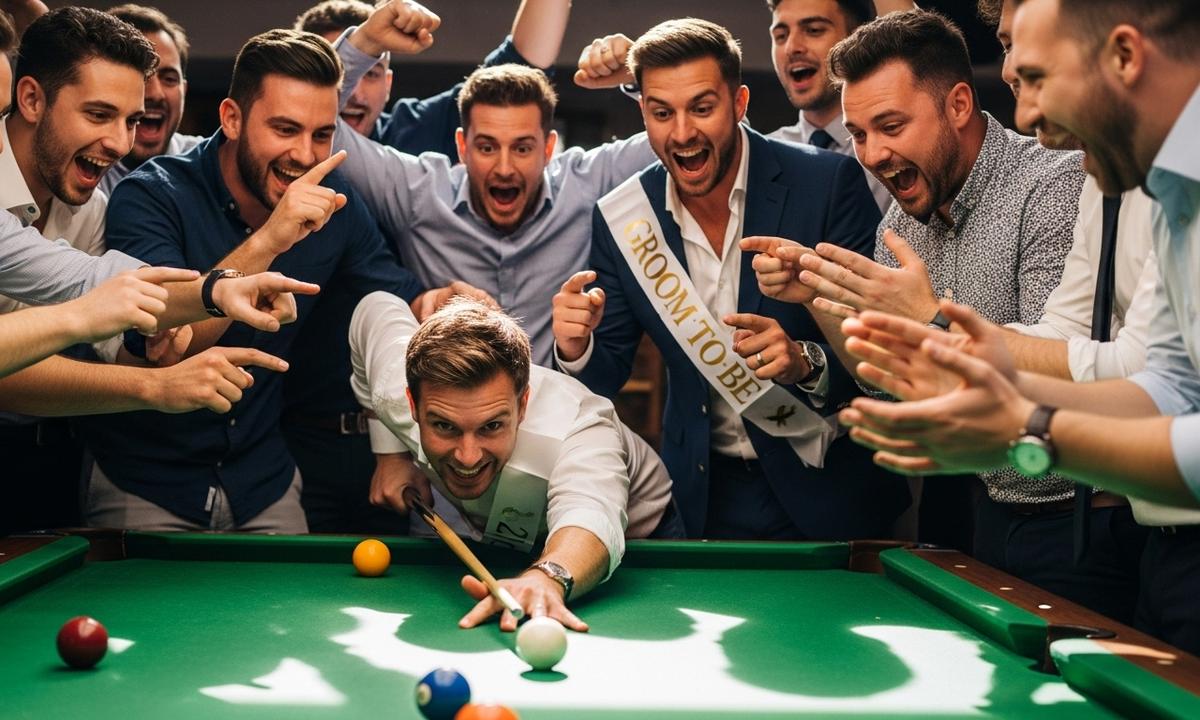
The best stag do games ideas are all about fun, chaos, and good memories. Whether you’re planning a big night out or a weekend getaway, the right mix of games and challenges will keep the laughs going and make the groom’s send-off legendary.
Words by: Sixes Cricket
The stag weekend, when done properly, should feel like the most elegant rebellion imaginable — a brief pause between the routines of ordinary life and the solemnity of matrimony. For too long, stag dos have conjured images of forced merriment and regrettable costumes. The modern host knows better. A refined celebration can still be riotously fun, but it should leave behind good stories, not police statements.
The secret lies in balance. The right selection of games provides pace, structure and camaraderie. They fill those long stretches between meals and evenings out, giving shape to laughter rather than chaos. The following ideas combine activity with ease and humour with civility. Each has been field-tested by countless gatherings of otherwise responsible adults and has survived the morning-after scrutiny.

Structure has its virtues. A carefully planned day of light-hearted contests gives everyone something to do, keeps groups cohesive and allows quieter members to shine in ways that a pub alone never could. Think of it as a modern tournament — one part sport, one part farce.
Arrange a rotation of games that alternate between physical and mental skill. A five-a-side match or a brief game of touch rugby can be followed by a short quiz, a darts round, or even a speed-assembling challenge involving everyday objects. Keep the tone light: competition should be spirited, not savage.
The trick is to frame the day theatrically. Provide team names, assign a slightly pompous master of ceremonies, and distribute points with the generosity of a Christmas raffle. Small prizes make people absurdly happy; silly ones make them happier still. The day ends with an awards moment, preferably over dinner, where triumph and failure are greeted with the same roar of approval.
No institution on earth facilitates social sport quite like the British pub. Within its walls exist all the tools required for gentle rivalry — darts, pool, cards, table skittles, and an inexhaustible supply of good humour. A pub Olympics simply formalises what Britons have done for generations: compete convivially, pint in hand.
Map a route of four or five establishments, ideally within walking distance, each hosting a single event. The first might be a quick-fire darts challenge, the next a pool frame, followed by a round of general knowledge or a test of dexterity with beer mats. Keep the scoring consistent and the distances short. This is a circuit, not a crawl.
The brilliance of the format lies in its pacing. Every stop offers a reset; conversation continues to build; spirits stay buoyant. By the time the final tally is announced, no one truly remembers who won — only that the afternoon disappeared agreeably into evening.

Every friendship group contains a historian — someone who remembers the bridegroom’s worst haircut, his first car, his brief flirtation with experimental facial hair. The Groom Quiz gives such details their moment of glory. It is part biography, part roast, entirely good-natured.
Begin by gathering material from those who know him best. Ask family for childhood incidents, university friends for cautionary tales, and colleagues for office legends. Organise the questions into rounds — youth, romance, geography, taste — and appoint a quizmaster with a sense of theatre.
The goal is affectionate exposure. Include the occasional curveball of sincerity: “What does he claim to cook best?” or “Where did he first meet his partner?” It creates a rhythm of laughter and warmth. By the end, the groom will have endured light embarrassment, and everyone else will have learned something new about the man whose name is on the invitations.
Some games don’t need a table; they need time. A Taskmaster-style weekend turns the entire trip into an ongoing performance. Before departure, each guest receives a sealed envelope containing a private mission to complete before the final evening. The tasks should be absurd but harmless — produce the most extravagant moustache by sunset, quote Shakespeare in casual conversation, acquire an object shaped like a heart.
The true fun lies in secrecy. For two days, guests perform their challenges in plain sight while pretending nothing is amiss. Only during the final dinner are the results revealed, often accompanied by photographic evidence and uncontrollable laughter.
This format works anywhere — city, countryside or seaside — and needs no equipment beyond imagination. It creates a shared mythology that will resurface in wedding speeches years later.

Sometimes simplicity wins. The scavenger hunt endures because it turns a group of adults into conspirators and the surrounding town into a playground. It costs next to nothing yet generates enough stories for months.
Divide the party into small teams and hand each a list of missions. Include tasks that invite wit as much as resourcefulness: photograph a stranger wearing the groom’s initials, trade an inedible item for something edible, or locate a piece of architecture resembling a famous celebrity.
Set a generous time limit and a single rule — no taxis unless absolutely necessary. The return is the highlight: flushed faces, mismatched souvenirs and explanations no one quite believes. Award points liberally and let storytelling become the real competition.
There is something satisfying about a few hours of healthy exertion before the evening begins. Choose a sport that suits the crowd: golf for the precise, cricket for the theatrical, football for the energetic, or archery for those who enjoy looking heroic in photographs.
Keep the organisation light and the tone lighter. Mixed abilities make for better entertainment. Offer minor prizes — a bottle of something respectable, perhaps, or a homemade trophy. Losers should be made to wear their defeat cheerfully, ideally in the form of a novelty hat.
The point is not fitness but fellowship. Physical competition resets the energy of the weekend and ensures that the first drink of the evening feels thoroughly deserved.

Some games unfold best at half the pace. A tasting session, whether of whisky, gin, or good wine, provides structure for conversation and allows the group to rest while still feeling delightfully occupied. Arrange five or six varieties, label them only by number, and invite everyone to record their impressions.
Blind tastings are ideal because they expose prejudice in the most elegant way. Someone will mistake supermarket gin for a boutique distillation; another will discover that their expensive favourite fares poorly in the dark. Between sips, debates bloom about flavour, memory, and morality.
Such sessions also provide an easy transition from daylight to evening — a civilised prelude before the night expands. The laughter becomes slower, the talk warmer, the friendship more visible.
Few pursuits balance wit and silence so perfectly as a game of cards. Poker, properly conducted, offers all the tension of a heist film without leaving the room. A velvet cloth, decent chips, low lighting, and slow drinks will transform an ordinary sitting room into a den of civilised intrigue.
Keep the buy-in nominal and the rewards symbolic — breakfast duties, playlist control, first pick of rooms. What matters is conversation between hands: half bluff, half confession. The game invites psychology and theatre in equal measure.
It’s often the quietest hours that are most remembered. Long after the last hand is folded, the rhythm of cards and laughter remains, softened by the memory of good company.

Among the more refined amusements, this one combines mischief with grace. At the start of the trip, each participant draws another’s name in secret. Their task is to deliver a toast to that person at some unpredictable point during the weekend — sincere, flattering, and spontaneous enough to avoid suspicion.
Throughout the event, odd moments of praise begin to appear, leaving the group puzzled but amused. Only when the game is finally revealed does the pattern make sense. The result is hilarity followed by genuine warmth. It reminds everyone that beneath the humour lies affection, and that friendship, properly toasted, is as fine a tradition as any.
Sometimes the simplest childhood games yield the greatest joy. A country field or a generous garden becomes the stage for sack races, egg-and-spoon, tug-of-war and obstacle courses. Participants, inevitably overdressed, discover that coordination fades rapidly after thirty.
Appoint an overly serious commentator, distribute rosettes, and insist upon a closing ceremony complete with anthem and imaginary sponsors. It’s nostalgia served with irony. The photographs will look absurd and glorious, which is precisely the point.

Every celebration needs one moment of stillness. Gather after dinner, dim the lights slightly, and invite each guest to write down a memory involving the groom — something funny, touching or faintly incriminating. The papers are mixed and read aloud while he guesses the author.
The game begins with laughter but often ends with reflection. It reminds everyone why they’re there: not simply to mark a transition but to honour the years that came before it. No prizes required; the value is self-evident.
In an era of constant imagery, there’s still something magical about giving photography a purpose. Arm each team with a camera or a shared online album and a list of shots to capture during the weekend: the groom mid-laughter, the most questionable pose, a moment of unlikely elegance, a sign that seems to mock you.
By the end, the collection becomes the chronicle of the trip — chaotic, affectionate, and perfectly unfiltered. Compiled into an album for the wedding morning, it becomes the one gift that can’t be bought.

Good style can be playful. Before departure, assign each guest a secret sartorial rule: an item in tartan, a film reference, a colour borrowed from the bride’s palette. On arrival, everyone looks faintly odd but inexplicably coordinated.
The discovery unfolds naturally — one man notices another’s suspiciously similar pocket square, a third confesses his floral tie is thematic. It is gentle, visual comedy at its most sophisticated, producing photographs that speak volumes about collective silliness.
At its heart, a stag weekend is an excuse for conversation. A long dinner punctuated by impossible questions revives that lost art. Each course begins with a new dilemma: would you rather revisit your worst haircut or your worst decision? Win a fortune or be remembered fondly? Speak every language or forget none of your mistakes?
What begins as parody often becomes philosophy. Between wine and laughter, honesty emerges. The best evenings unfold exactly this way — starting in amusement, ending in friendship.
A finale with ceremony transforms an ordinary trip into a legend. Prepare light-hearted categories — Best Navigational Effort, Most Unhelpful Advice, Quietest Genius, Loudest Laugh. Print mock certificates, or better still, scribble them onto napkins with feigned importance.
Present them after dinner amid mock applause and improvised speeches. This closing ritual cements the weekend as something shared rather than merely survived. When everyone disperses the next morning, the memory already feels like folklore.

A perfect stag do, like a perfect dinner, is not remembered for any single moment but for its composition. A mixture of movement and stillness, energy and ease, laughter and sincerity. Games provide that balance. They turn strangers into friends and a weekend into a story.
Choose with care, execute with style, and leave space for accident — the best laughter always arrives unscripted. When all is over and the last cup of coffee is drained, the only hangover that remains should be the pleasant ache of too much laughter and the faint knowledge that friendship, when well celebrated, is its own kind of luxury.