2 October 2026
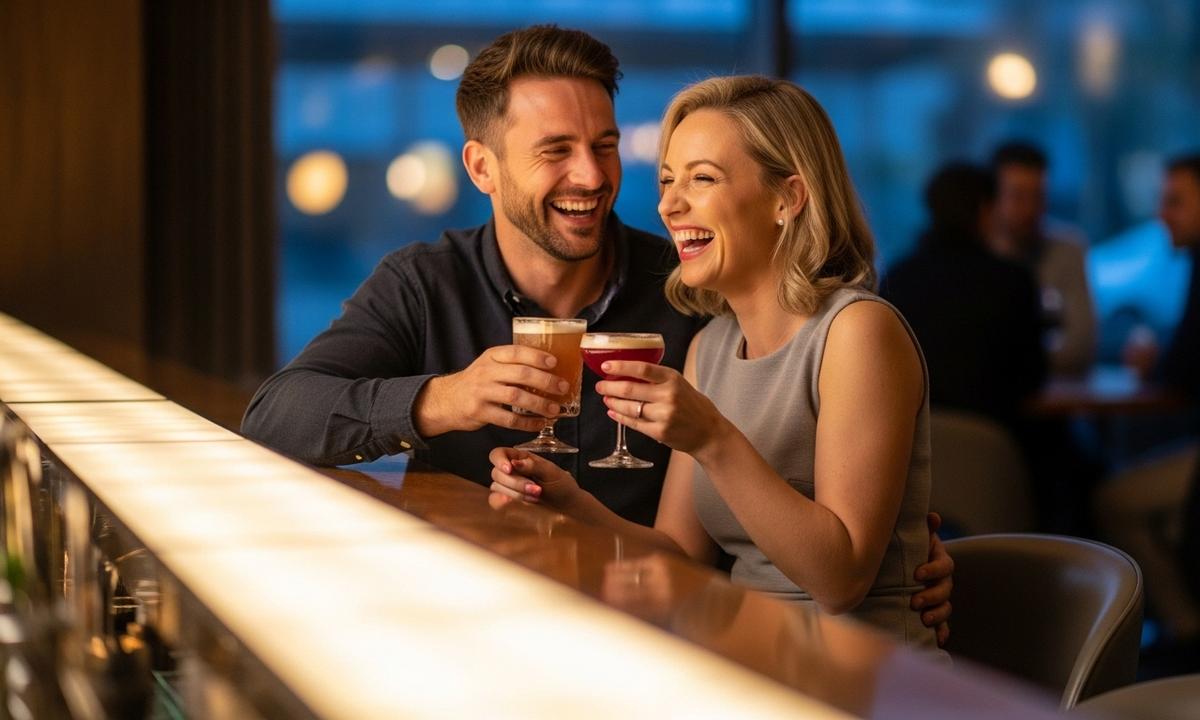
Happy Hour began not in bars but in barracks, a brief reprieve from discipline that later found its way to the martini glass.
Words by: Sixes Cricket
The best hours of any day are seldom the ones we plan. They are those moments that arrive unannounced, when conversation finds its rhythm, when appetite stirs but urgency fades. For much of the modern world, this moment has a name: happy hour. It is an invention so simple, so cheerfully optimistic, that one forgets it had to be invented at all.
Happy hour promises a transition, not a transformation. It marks that narrow bridge between work and leisure, where the day still clings faintly to purpose but the evening has begun to breathe. It is a civilised pause, a ritualised sigh, a glass raised to the idea that one might take pleasure in the ordinary.
Yet the phrase itself, now plastered on blackboards and menus around the world, began life in an entirely different setting. Its origins have more to do with uniformed sailors than cocktail shakers.

The earliest happy hours were not about drinks at all but diversion. In 1913, aboard the USS Arkansas, officers in the United States Navy began scheduling regular periods of recreation for their crews. These gatherings involved boxing matches, music, and amateur theatricals, each designed to lift spirits during the long tedium of sea voyages. They were called, quite straightforwardly, Happy Hour.
The idea caught on quickly. A 1918 naval report described “popular Happy Hour programmes” being held weekly on ship decks, complete with band music and organised entertainment. For men confined for months to iron corridors and salt air, an hour of amusement was essential to morale. It was, in short, the Navy’s first welfare programme, packaged with a smile.
By the time the First World War ended, the phrase happy hour had become a colloquialism for any scheduled respite from labour. Its journey ashore was inevitable. The sailors returned home, the words came with them, and soon “happy hour” had taken root in American popular culture as shorthand for that blessed moment when duty could finally rest.
A century later, the essence remains. In Britain, the modern version is played out in warm interiors rather than on the open sea. At Sixes Cricket, for example, the spirit of the naval “happy hour” lives on, translated for an audience that prefers a good cocktail to a compass. Here, recreation and refreshment merge seamlessly: friends step into the nets, take a few joyful swings, then drift toward the bar where glasses meet in celebration. The transition from play to pleasure is effortless. It is, in its way, exactly what the sailors were seeking: relief, laughter, camaraderie, and the gentle permission to stop.
If the Navy invented the phrase, the American bar industry perfected its marketing. During Prohibition in the 1920s, “happy hour” began to appear as a private code among those who gathered for pre-dinner drinks in secret clubs and homes. The era’s polite euphemisms hid a certain defiance. Guests would meet discreetly for a “happy hour” before moving on to restaurants that, officially at least, served no alcohol.
When Prohibition ended in 1933, the custom persisted. By the 1950s, hotel bars and cocktail lounges were advertising happy hour specials to draw customers in before dinner. The notion of a discounted drink at five o’clock felt both practical and indulgent. It flattered the idea of hard work rewarded by small, predictable joy.
Newspaper clippings from the 1950s describe missile technicians, salesmen, and office workers timing their evenings around the promise of half-priced martinis. By the early 1960s, the phrase had become as common as “rush hour,” its cheerful twin. It was the democratisation of leisure: happiness, now available at a set time, with table service.

Britain took its time adopting the phrase. The English ear found “happy hour” a touch too eager, too American, too sunny for a nation whose sense of pleasure tends toward understatement. The public house, after all, had long offered its own rhythm of release. We did not require a name for what came naturally.
But as travel and media intertwined, the concept began to migrate. By the 1980s, “happy hour” appeared on chalkboards across London and Manchester, offering two-for-one cocktails or reduced pints before supper. The British interpretation was instantly subtler. The emphasis was not on price but on atmosphere. Bars dimmed the lights, music grew a fraction louder, and the after-work crowd exhaled together.
The term’s self-conscious cheer began to sound ironic, which perhaps made it acceptable. Britain took America’s optimism and lent it irony, and somehow the blend worked.
The success of “happy hour” lies in its phrasing. The word hour provides structure. It reassures the conscience that indulgence has its limits. The word happy is its moral justification. Together they create a phrase that feels both virtuous and inviting.
In a century that prizes productivity, “happy hour” is an act of quiet rebellion. It insists that joy, too, deserves its slot on the calendar. It is a linguistic marvel: an advertising slogan that transcended marketing to become folklore.
When a phrase becomes habit, its poetry disappears. Yet to describe happiness as a measurable unit of time is absurdly elegant. It acknowledges that pleasure, like all good things, is brief and therefore valuable. The hour is not endless. It is enough.

The culinary side of happy hour tells its own story. Early versions focused almost exclusively on drink, but as hospitality evolved, food joined the act. Small plates, shared boards, and savoury bites turned the pre-dinner interval into an experience of its own.
In America, oysters and shrimp cocktails became staples of hotel lounges, while in Britain, the modern equivalent leans toward sliders, cured meats, and spiced nuts served with polished nonchalance. The appeal lies in informality. The food must be flavourful but never demanding, designed to accompany conversation rather than interrupt it.
In this sense, happy hour has influenced not only how we drink but how we eat. The rise of grazing menus, sharing platters, and aperitivo-style service all owe something to this modest invention. It proved that the appetite of the early evening is as much social as physical.
What makes happy hour remarkable is its endurance. Fashions in food and drink change, yet the idea of a daily ritual devoted to release persists. It satisfies something more profound than thirst.
To declare a happy hour is to create permission. It tells the body it may stop performing. It invites conversation to wander. It reminds us that the day, for all its structure, can end with laughter rather than fatigue. This is why the practice appears in every culture, under different names. The Italians have their aperitivo, the French their apéritif, the Spanish their tapeo. Each serves the same purpose: a collective breath before the night begins.
In Britain, happy hour carries a particular resonance because it restores rhythm to the week. It is the moment the city exhales, when work and friendship trade places, and the weight of obligation becomes pleasantly light.

Today, “happy hour” is as much about energy as economy. The best establishments understand that it is not the discount that matters but the sense of occasion. A well-made cocktail, a properly chilled glass of wine, and a plate of warm food shared among friends are the details that make the hour memorable.
Bars and restaurants across Britain now treat it as theatre. The music shifts tempo, the lighting warms, and the service relaxes slightly. For a brief spell, everyone in the room seems united in a quiet conspiracy of pleasure. It is not hedonism; it is harmony.
The idea extends beyond alcohol as well. In recent years, non-alcoholic options have multiplied, proof that the essential ingredient of happiness has never been ethanol but atmosphere. The joy lies in connection, not consumption.
Many commercial terms fade as quickly as they rise, but “happy hour” remains untouchable. It has transcended marketing and entered idiom. People use it to describe any moment of reprieve: a break in the day, a reunion, or even a child’s bedtime story. The phrase has become shorthand for collective ease, proof that language can turn commerce into culture.
Some governments have tried to ban it, arguing that discounted drinks encourage excess. Yet the concept refuses to disappear. It survives because it answers an ancient instinct, the wish to set aside time for pleasure without guilt.
The truth is that happiness cannot be legislated, but it can be scheduled. For an hour, or perhaps a little longer, we stop counting and start living.

To ask how happy hour got its name is to ask how civilisation learned to relax. From the decks of naval ships to the glow of cocktail bars, the phrase has travelled across a century of shifting manners and tastes. It has survived prohibition, regulation, and the disapproval of the pious.
It endures because it understands people. The promise is simple and entirely human: an hour for joy, reliably available, modestly priced in time rather than money.
The lights are low, the glasses shine, and the day recedes politely into memory. Somewhere, a clock strikes five, and across the city a thousand small happinesses begin.