Skip to content
How To Throw The Best Office Party Ever
29 October 202510 min read

How To Throw The Best Office Party Ever

Figuring out how to throw the best office party ever is all about balance. You need the right mix of energy, planning, and personality. With a few smart touches, you can turn an ordinary event into something the whole team looks forward to.

Words by: Sixes Cricket

There is an art to the office party, and like all true arts, it flourishes not in noise or novelty but in the deft calibration of tone. A good office party is not simply an evening of tepid wine and fluorescent lighting. It is a social ballet: the careful loosening of ties, the temporary suspension of hierarchy, and the faint, collective sense that perhaps—just perhaps—this is what the workplace might feel like if freed from deadlines and spreadsheets.

The trouble, of course, is that few such soirées ever rise above the level of forced gaiety. The great ones are whispered about for years. The poor ones are recalled only with winces and a change of subject. The difference lies not in budget but in judgement. One must understand atmosphere, pace, proportion. One must know when to dim the lights and when to serve the champagne. And above all, one must remember that the finest parties do not look organised—they simply seem to happen, with that faint, elusive air of inevitability that only comes from meticulous design.

So, let us consider what makes a truly superb office party: not the kind that fills the calendar, but the kind that fills the memory.

Setting the Scene

Setting the Scene

It begins, as everything civilised does, with setting. One must resist the lure of convenience. A corporate function room with patterned carpet and a collapsible stage will never feel glamorous, however many balloons one suspends from the ceiling. Instead, think of venues with a sense of place—rooms that possess their own quiet confidence.

Brickwork, burnished wood, a trace of history in the architecture—these lend gravitas. A high ceiling or a touch of greenery never goes amiss; both lift the mood, literally and figuratively. Choose somewhere that speaks softly of style, not somewhere that shouts of it. The best parties unfold in places that already have a pulse.

Lighting, too, is a matter of moral importance. Harsh white light belongs to board meetings and surgical theatres. For an office party, one needs something closer to candlelight: soft, flattering, conspiratorial. The kind of light in which laughter sounds warmer and people look better than they remembered.

A venue that handles light well already understands hospitality. That understanding is worth far more than a thousand ‘fun’ props or themed centrepieces.

The Arrival

Every good party begins before anyone realises it has started. Guests should not so much arrive as drift in, greeted by music that already has the room moving at an easy tempo. The welcome drink—something brisk and effervescent, preferably in glass rather than plastic—acts as a cue, a small ceremonial token that says,

“You’ve left work behind.”

Resist the temptation for long speeches or managerial toasts. The most effective host knows when not to speak. Let the music, the clink of glasses, and the laughter do the talking. Those first ten minutes determine the trajectory of the evening. Handle them well, and the rest follows naturally.

The People (and the Politics)

The People (and the Politics)

Office parties have their own quiet social architecture. They are a rare moment when departments collide, hierarchies blur, and the intern may find herself discussing travel with the managing director. To make that alchemy possible, one must remove barriers—literal and figurative.

Tables too large create fortresses; round ones foster conversation. Avoid the tyranny of seating plans, which enforce interactions that rarely flourish. Give people the space to wander. Circulation is the lifeblood of sociability.

Music should be lively enough to erase awkward silences but never so loud that people must shout. No one wishes to end an evening mouthing “what?” across a table.

And then there is that subtle art of matchmaking—the careful placing of certain personalities together, not romantically, but rhythmically. Every office has its raconteurs, its introverts, its secret wits. A good host lets each play their part in the ensemble. Too much of one note, and the composition falters.

The Food

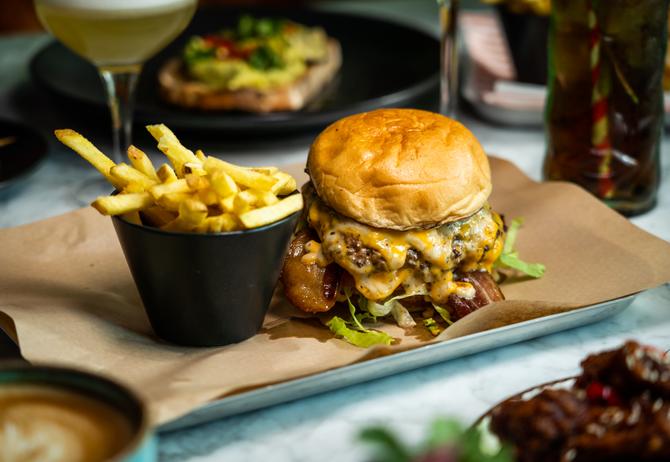
There is a curious British belief that if people are drinking, they need only be fed in passing. This is false. Food at an office party should be thought of not as ballast but as punctuation—the rhythmic beats that keep the night elegant rather than chaotic.

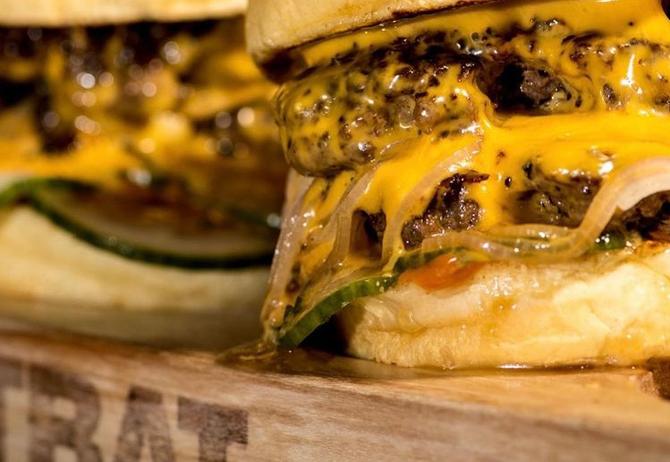
Forget the sad tray of vol-au-vents or the platter of underwhelming canapés. Opt instead for dishes that encourage sociability. Sharing plates, small bites, generous boards—food designed to be grazed and passed, rather than plated and forgotten. It signals informality but with taste.

Temperature, texture, and timing matter. Nothing kills a conversation faster than a mouthful of something unmanageable. And there is, quite simply, no substitute for good bread.

When people remember a party, they rarely recall the music or the décor first. They recall how they felt. Food anchors memory. Serve it well, and the evening becomes an event rather than a date on the calendar.

The Drink

The Drink

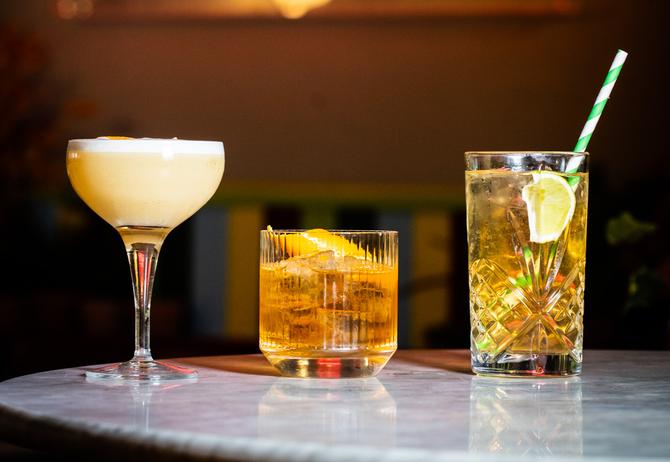
The golden rule: quality over quantity, and always variety. A well-considered bar is not a display of excess but of discernment. Offer a few classics—gin and tonic properly made, wine that doesn’t fight back, and perhaps one or two house cocktails mixed with care.

A signature drink can become the evening’s quiet motif, a thread that ties the night together. But never insist on it. People should feel indulged, not instructed.

A well-timed espresso martini—just as the energy begins to dip—can revive an entire crowd. Champagne should arrive not at the start but when the party finds its rhythm, when conversation hums and everyone is just self-aware enough to notice that they are, in fact, having a wonderful time.

Water, too, is the mark of civilisation. The best hosts ensure it appears without anyone asking.

The Music

Music at an office party should feel curated, not compiled. It must have progression: a gentle beginning, a confident middle, and an ending that suggests satisfaction rather than exhaustion. The early playlist should be conversational; think subtle bass lines and tracks that people recognise without needing to comment on them.

Later, as the evening matures, the tempo can rise—but never to the point of frenzy. Remember, this is not a club night. A touch of disco, a whisper of Motown, a hint of contemporary charm; that will do nicely.

The secret lies in timing. Introduce the familiar just as people’s inhibitions begin to fade. The right song at the right moment is worth more than any decorative flourish. It unites a room, however briefly, in shared recognition.

The Conversation

The Conversation

The best office parties produce a kind of conversational grace. Work talk fades naturally into life talk, and laughter acquires an easy rhythm. The successful host encourages that shift by removing cues of formality. No one should see a presentation screen or a company logo once the party begins.

Good conversation thrives on discovery. Introduce new topics, not through icebreakers (an abomination) but through environment. A well-placed photograph, an intriguing cocktail name, an unexpected activity—these become natural openings.

And remember: people do not need encouragement to have fun. They need permission. The greatest compliment one can pay a host is to say the evening felt effortless. Effortless, of course, is the most demanding of all achievements.

The Pace

A party, like a novel, needs rhythm. It should begin lightly, build slowly, peak gracefully, and end before it declines. Too short, and it feels abrupt; too long, and the energy dissipates. The ideal moment to conclude is when everyone still wishes to stay. That desire becomes nostalgia by morning, and nostalgia is what keeps the legend alive.

Small gestures keep the momentum alive—a discreet change of music, a new drink appearing, a platter circulating just as conversation flags. The host must sense the room as a conductor senses the orchestra.

And when the time comes to draw things to a close, do so quietly. Nothing kills enchantment like a shouted “last call.” Let the night end as it began: gracefully, with laughter still hanging in the air.

The Afterglow

The Afterglow

A truly great office party does more than entertain. It recalibrates the collective mood. It makes colleagues see one another not as roles but as people, united not by deadlines but by delight. That subtle alchemy is what transforms a workforce into a community.

The morning after should bring not regret but affectionate reminiscence. “That was rather marvellous,” people should say, perhaps over coffee, with that particular smile reserved for evenings that went exactly right.

The best office parties do not merely happen; they become. They settle into the company’s folklore, retold in fragments each year, proof that the place one works can also, occasionally, be the place one plays.

The Secret Ingredient

And here we arrive at the question of entertainment. Music, conversation, and cocktails are all well and good, but every party needs a heartbeat—a shared experience that brings people together in a way that small talk never quite can.

Forget karaoke. Forget team-building quizzes or trust falls. The modern office craves something with wit, movement, and just enough competition to spark camaraderie. Something that feels refined yet unpretentious.

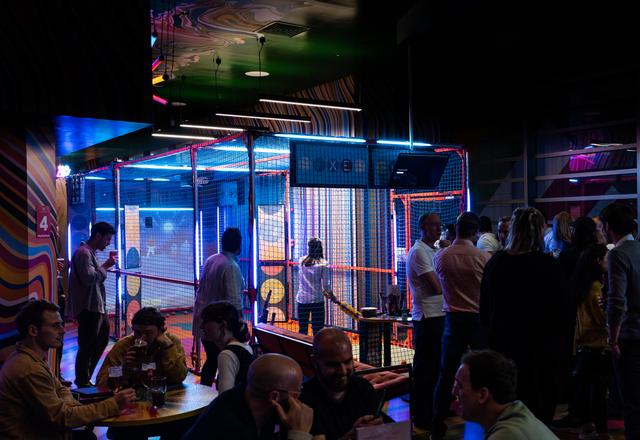
Enter the activity bar. That rare, enlightened concept where sociability meets play. It transforms the party from static to kinetic, from background noise to collective experience. It gives guests a reason to mingle, to cheer, to laugh without the faint awkwardness of forced fun.

And among the new temples of this noble art, one name has rather quietly—yet decisively—set the standard.

The Sixes Way

The Afterglow

Sixes is not merely a venue. It is, in its own understated fashion, a revelation. Imagine the pulse of cricket—yes, cricket—but reborn as social theatre. The crack of the bat, the flicker of competition, the laughter of colleagues rediscovering their inner child, all within an atmosphere that feels more Mayfair than match day.

Here, sport meets supper with uncommon grace. The food is proper—crafted, not concocted. The drinks are chosen with discernment. The décor blends the tactile warmth of a clubhouse with the urbane ease of a members’ lounge. The result is something remarkably rare: an office party that feels both spontaneous and impeccably produced.

Colleagues step into the nets and suddenly the titles—director, assistant, intern—fall away. There is only the sound of friendly rivalry, the glint of competition, and the kind of laughter that binds people long after the evening ends. One might even call it team building, though that would be far too pedestrian a phrase for what occurs at Sixes.

What matters is the mood. At Sixes, it shifts naturally: from playful to convivial to quietly celebratory. One moment you’re testing your aim; the next you’re toasting the best shot of the night with something sparkling and well chilled. It is the rare setting that makes a crowd feel both at ease and ever so slightly extraordinary.

The Finale

The Finale

So, how does one throw the best office party ever? With style, certainly. With taste, without question. But above all, with understanding—the understanding that true celebration lies in connection, not display. It is not about ostentation, but about atmosphere. Not about excess, but about experience.

Choose a venue with charm and character. Set the tone with warmth rather than rules. Feed people well. Let the music breathe. And then, when the energy begins to gather and the laughter takes hold, give them something to do—something communal, spirited, and unexpectedly delightful.

In other words, end where all the best parties do these days: at the activity bar. And of course, at Sixes.