2 October 2026
The word 'bottomless' has a 600-year history, but how it ended up on a brunch menu is a more recent story. Here's the full explanation.
Words by: Sixes Cricket
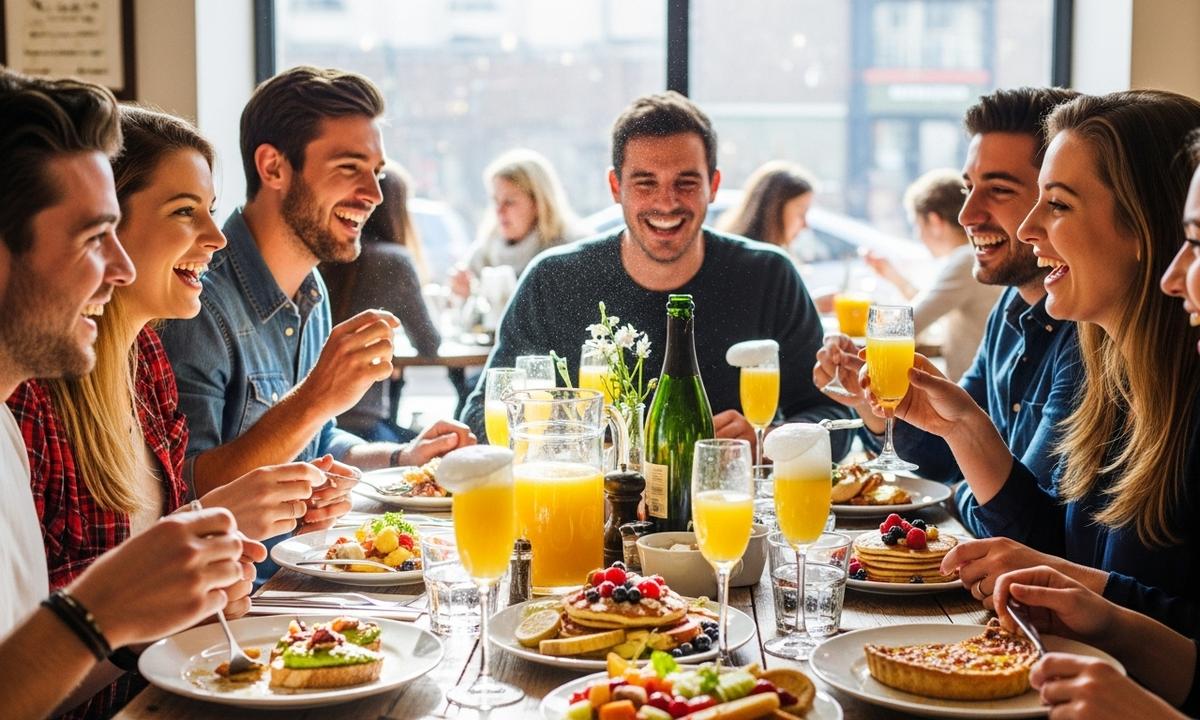
Bottomless brunch has gone from a niche trend to one of the most popular ways to spend a weekend in the UK. Almost all pubs, restaurants, rooftop bars and activity venues offer some version of the event now, and if you've been to one, you'll know why the format has become so popular: a fixed price, good food, and drinks that keep arriving until the clock runs out.
But have you ever stopped to think about where the name actually comes from? The answer sits in two separate histories, one for 'brunch' and one for 'bottomless', that didn't meet until surprisingly recently. Here's the full story, along with what you can actually expect when you book a bottomless brunch.
The word “brunch” is a portmanteau- a word made by squashing two other other words together, usually to describe a combination of those two words. In this case, it's the 'br' from breakfast and the 'unch' from lunch to describe a meal eaten between breakfast and lunch. Simple enough.
The word first appeared in print in 1895 in a British newspaper article about Oxford University slang. At the time, Oxford students had their own vocabulary for meals: breakfast was 'brekker', and if you skipped it entirely and ate later in the morning, that meal was 'brunch'. The same year, a writer called Guy Beringer published an essay titled 'Brunch: A Plea', arguing that people who'd been out on a Saturday night deserved a more forgiving meal than a formal Sunday breakfast. His pitch was a late-morning spread that was lighter, sociable and designed to put you in a good mood.
The satirical magazine Punch picked up the idea in 1896 and declared that 'to be fashionable nowadays we must brunch'. From there it crossed the Atlantic, landing in American hotel dining rooms by the 1920s, where it became associated with champagne, eggs Benedict and long Sunday mornings. Eventually it came back to Britain with a transatlantic polish and a drinks menu attached.

The word 'bottomless' is far older than you'd expect. It has been in the English language since the late 14th century, where it was used literally to describe something with no bottom, like a deep pit or an unfathomably deep stretch of sea. By the mid-1400s, it had picked up a figurative meaning: inexhaustible, without limit. That's the same sense you hear today when someone talks about a 'bottomless pit' of paperwork or a 'bottomless supply' of something.
The first time 'bottomless' was used to describe an unlimited serving of food or drink was in 1934, according to the Oxford English Dictionary. A restaurant in Chicago offered a 'bottomless cup of coffee' as part of a ten-cent breakfast. From there, the word slowly attached itself to refill-friendly menus across the US before eventually landing on brunch tables in Manhattan and, later, in the UK.
In America, mimosas have been a brunch fixture since the 1970s, when restaurateurs worked out that offering drinks early in the day brought people through the door.
The UK picked up the concept much later. Google Trends data shows that search interest in 'bottomless brunch' started growing around 2015 but accelerated in recent years due to it’s natural fit for social media. A table full of prosecco flutes and delicious food looks great on photo, and that helped the trend spread fast across Britain.
It also coincided with the rise of activity venues - places that combine food and drink with an activity like live music, pub quizzes or sports simulators. These venues gave bottomless brunch a new angle of offering something to do as well as something to drink.
Brunch and alcohol weren't always a natural pair. For most of the early 20th century, drinking before midday carried a social stigma, and brunch was closer to a late breakfast than a party. That started to shift in the 1950s, when post-war attitudes to leisure loosened up and daytime drinking became more acceptable among the middle classes.
The cocktails came first. The Bloody Mary, originally mixed in a Paris bar and later spiced up for American tastes in New York, became a go-to brunch order partly because of its reputation as a hangover cure. The mimosa followed a similar path. It started life in London as a "champagne-orange", reportedly a favourite of the royal family in the early 1960s, before making its way to the US where it became the default brunch drink by the late 1970s. Once those two cocktails were locked into the brunch routine, the leap to unlimited refills was only a matter of time.
This is where most of the confusion sits- “bottomless” refers to the drinks, not the food. You'll typically choose a single dish from a set brunch menu, like eggs Benedict, pancakes or avocado toast. The food is a fixed quantity- the drinks are the unlimited part.
How the drinks work varies by venue, but the standard format is a set time window, usually 90 minutes to two hours, with a specific list of included drinks. Common brunch drinks include prosecco, mimosas, wine or house cocktails. Refills are usually delivered by your server rather than being self-service, and there's usually a final call 15 to 20 minutes before your time is up. Keep in mind that a venue will have the right to refuse service if they think you’ve drank too much.
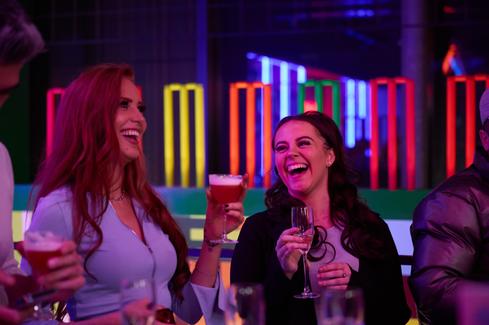
A growing number of venues have started pairing bottomless drinks with activities to make the experience more social. Live music, DJs, sports simulators and games are all common additions now. These give the event a structure that goes beyond sitting at a table, and they tend to work particularly well for larger groups where not everyone knows each other.

From the venue's side, bottomless brunch is a smart piece of commercial logic. The drinks are what's known in hospitality as a loss leader: the margin on each refill is thin, but the timed format keeps groups in the building for two to three hours. During that time, people order extra food, add desserts or upgrade their drinks. The kitchen and bar stay busy during what used to be a quiet gap between breakfast and lunch.
The word "bottomless" does a lot of heavy lifting in the marketing too. A fixed price for unlimited refills feels like a better deal than paying per glass, even when the total spend ends up roughly the same. That perception of value is what fills tables on a Saturday afternoon, and it's a big part of why the format has spread so quickly across UK venues.
Before you book, it's worth checking exactly what the price covers at the venue you're looking at.
The key things to confirm are:
Some venues are more generous than others, and the details aren't always obvious from a headline price. Think about what kind of experience suits your group too. A bottomless brunch paired with an activity works well if you want everyone to mix and get involved, especially when the group is drawn from different friend circles. A dedicated sit-down brunch without the activity element suits a smaller, more intimate gathering where the conversation is the main event.
Bottomless brunch bookings have become increasingly popular for celebrations. Birthdays and hen parties are the obvious ones, but private hires for brunch are catching on too. Having a private area means you're not competing with other tables for your server's attention, and you can set the pace of the afternoon yourselves.
If you're looking for a high-energy bottomless brunch with some excitement and competition between rounds of drinks, look no further than Sixes Social Cricket. It's a party cricket experience built around virtual batting nets- no cricket knowledge or experience required.
You can play while you eat and drink- we offer a selection of drinks for all tastes, such as beer, prosecco and cocktails. If that sounds like bottomless fun for your group, book now or get in touch with our events team.