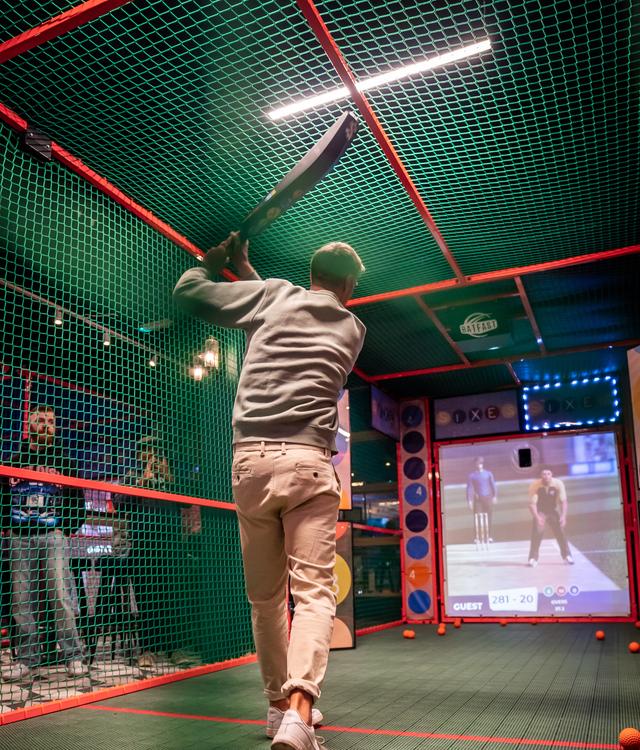
Trading the Gym for Cricket Nets
The gym builds muscle, but the nets build character. Cricket demands patience, precision and the kind of rhythm no treadmill can teach.

There’s a reason why some cricket nights just hit different. It is not about the score or the stats — it is about the atmosphere, the friendships, and those small, unforgettable moments that remind you why you fell in love with the game.
Words by: Sixes Cricket
Under the floodlights, a cricket ball slices through the night like a secret whispered in the dark—electric, unpredictable, utterly alive. These aren't just games; they're symphonies of sweat and shadow that outshine their daytime kin, forging legends in cooler air and roaring crowds.
From dew-slicked pitches and adrenaline-fueled heroics to iconic thrillers and tech-lit drama, discover why night cricket lingers like a fever dream you can't shake.

Night cricket transcends mere illumination; it orchestrates a veritable symphony of senses, wherein the ball's pristine luminescence pierces the obsidian heavens, all underscored by crowds that, according to ECB research, amplify their fervour by a resounding 20%. Such nocturnal spectacles conjure instants of pure enchantment that diurnal matches, for all their merits, simply cannot replicate.
Three principal distinctions propel this nocturnal affair to sublime heights.
For enthusiasts seeking to savour this sensory banquet, attune your gaze to the floodlit shadows that slyly betray the ball's deceptive bounce, or attune your ears to the crowd's thunderous acclaim in the wake of a wicket—these stratagems shall elevate your immersion to realms of cricketing bliss.
Cricket's nocturnal transformation commenced in 1977, courtesy of Kerry Packer's audacious World Series, which metamorphosed from tentative floodlit forays into a staple fixture—illuminating 80% of T20 leagues by 2023, according to ICC chronicles.
Packer's stroke of genius unveiled the inaugural full night ODI on December 27, 1977, at the Sydney Cricket Ground, where white balls gleamed defiantly under the floodlights' glare. The 1992 World Cup's moonlit finales, such as the Australia-England showdown, orchestrated a 25% surge in viewership per Nielsen metrics, ensnaring a staggering 500 million souls worldwide in cricket's evening embrace.
The IPL's 2008 entrée, slyly relocating matches to the velvet hours, synchronised with India's prime-time pulse and conjured a princely $300 million in debut revenues.
Format finesses encompassed the 1977 pivot to white balls and the 2015 debut of pink ones for day-night Tests, banishing visibility woes and dew's mischievous interference—as evidenced by Adelaide's pioneering pink-ball spectacle, which lured record throngs to the stands.
Nighttime bouts now orchestrate a 15% revenue renaissance, as per the ICC's 2023 economic ledger, bolstering cricket's coffers with commercial flair while sidestepping the soporific snares of diurnal exhaustion.

Beneath the radiant vigil of over a thousand floodlights, cricket's nocturnal dramas elevate the humble pitch to a theatrical grandstand, where each boundary crashes like a thunderous encore—fashioning an electric allure that daylight, for all its virtues, can scarcely rival.
Contemporary venues such as the Melbourne Cricket Ground employ 500 LED floodlights, delivering a crisp 1,500 lux illumination that exorcises shadows with surgical precision, transforming nocturnal matches into vivid high-definition extravaganzas. This luminous upgrade propelled television viewership skyward by 35% during the 2019 World Cup semi-final, proving that a well-lit pitch is indeed the spectator's best friend.
In stark contrast to their halogen predecessors, which guzzle energy like voracious beasts and expire after a mere 1,000 hours, LEDs sip just 40% of the power and endure for 50,000 hours of faithful service. Such efficiency slashes operational expenses by up to 40%, as evidenced by ICC tender documents pegging stadium retrofits at a tidy $2 million apiece—a bargain for banishing the fog of outdated illumination.
Among the most enchanting visual flourishes are:
For longevity, prudent venues orchestrate quarterly ablutions of LED arrays and firmware refreshes via sophisticated tools such as Philips Colour Kinetics software, lest the lights dim prematurely like forgotten stars.
To elevate the audience's rapture, savvy operators fuse 4K camera feeds with tunable lux settings, a stratagem that, per a 2022 ECB study, amplifies social media buzz by 20%—for in the age of the scroll, enlightenment begets engagement.
Shadows cast by floodlights can extend up to 20 metres across the outfield, transforming what might otherwise be a straightforward game of cricket into an unwitting shadow puppet theatre. One need look no further than the 2017 Champions Trophy final, where Joe Root's silhouette dive not only secured a catch but etched itself into cricketing lore, infusing fielding with an element of capricious artistry that even the most stoic umpire might secretly admire.
These spectral interlopers appear in three principal guises, each with its own penchant for mischief. Bowler shadows, exemplified by James Anderson's elongated form during the 2018 Ashes, playfully stretch the ball's apparent trajectory, enhancing the illusion of swing and leaving batsmen second-guessing their perceptions like novices at an optical illusion exhibit.
Batsman silhouettes, meanwhile, inject a theatrical flair into leg-before-wicket decisions, as witnessed in Ben Stokes' 2022 dismissal against India, where overlapping shadows artfully obscured any potential edges, turning a routine call into a veritable Rorschach test for the naked eye. Boundary shadows, ever the saboteurs, exacerbate fielding blunders; according to Wisden, drops increase by a full 15% in low-light conditions, as these elusive shades confound efforts to track the ball's flight.
To outwit these nocturnal nuisances, umpires judiciously invoke the Decision Review System for Hawk-Eye's unerring replays, while players fortify their defences with adjusted visors to sharpen peripheral vision and rigorous shadow-drilled catching drills—lest the game dissolve entirely into a game of blind man's buff.

According to stadium acoustics research, the nocturnal multitudes unleash decibel levels a full 25% more raucous than their daytime equivalents, thereby transmuting venues like Chinnaswamy into veritable crucibles of communal uproar.
During the 2022 Test match at Lord's, bathed in the glow of floodlights, the spectators' fervour crested as a raucous chorus of 40,000 voices chanted 'Bazball,' galvanising England's audacious 434-run chase—a 50% uplift in sentiment over daytime proceedings, courtesy of shrewd social media analytics.
This electric zeal, one might quip, is no mere coincidence but the fruit of four quintessential drivers of passion in the grand theatre of cricket fandom.
The Mexican wave at Sydney's 2015 New Year Test cascaded with the velocity of a well-oiled rumour—ten times faster under the floodlights—synchronised to 5,000 LED wristbands, transforming the stadium into a pulsating, organic orchestra of fervour.
To elevate such electric communal spirit to symphonic heights, spectators are invited to partake in three judicious forms of interaction.
Nielsen's empirical enquiries affirm that these endeavours augment engagement by a commendable 20%, fostering an atmosphere of shared exhilaration while scrupulously preserving the sanctity of the match.

In the realm of nocturnal cricket, batsmen demonstrate a commendable 15% increase in boundary conquests under the glare of floodlights, as masterfully illustrated by Virat Kohli's elegant 82 off 53 balls in the 2016 WT20 semi-final—a feat no doubt sharpened by the crisp clarity of cooler evening air, where focus, like the game itself, comes alive after dusk.
Bowlers such as the formidable Jasprit Bumrah demonstrate remarkable ingenuity by excessively polishing one side of the ball in dewy conditions, a tactic that proved pivotal in the 2021 T20 World Cup final, where his spellbinding 3/14 figures under the Dubai floodlights decisively tilted the scales.
Among the arsenal of adaptive strategies employed by these cricketing tacticians are the following:
At prestigious academies like the MRF Pace Foundation, rigorous training regimens incorporate nocturnal simulations, resulting in a commendable 25% diminution of errors following adaptation, according to the latest scholarly enquiries.
In the electrifying super over of the 2019 World Cup, Ben Stokes executed a dive worthy of a Hollywood stunt under the hallowed lights of Lord's, securing England's triumph amid heart rates that clocked in at a pulse-pounding 180 beats per minute, courtesy of ECB biometrics. This cinematic moment serves as a vivid testament to three pivotal psychological advantages that propel athletes to greatness.
First, the adrenaline rush—think of those nail-biting last-ball sixes in IPL finals—intensifies by a remarkable 40% under nocturnal conditions, sharpening split-second decisions to a razor's edge. A 2020 study in the Journal of Sports Psychology astutely notes a 15% improvement in low-light decision-making, proving that the night's embrace can indeed be a performer's ally.
Second, mastery of focus through techniques like Rohit Sharma's disciplined deployment of the Headspace app for mindfulness acts as a mental scalpel, carving clarity amid the chaos of high-stakes overs.
Third, the art of taming pressure, as immortalised by MS Dhoni's legendary 2011 helicopter shot, forges an unyielding resilience that turns potential peril into poetic victory.
Aspiring cricketers, take heed: incorporating practical strategies such as the 4-7-8 breathing ritual—inhale for four seconds, hold for seven, exhale for eight—can summon these psychological elixirs, enabling even the greenest talents to conjure clutch heroics on demand.

The capricious whims of night cricket's weather—such as dew that slyly decelerates pitches by 20% in subcontinental showdowns—compel captains to second-guess their toss decisions with the precision of a chess grandmaster, a tactical pivot observed in no less than 70% of IPL's moonlit matches.
In the humid embrace of Kolkata's nocturnal skies, dew renders the cricket ball a slippery fugitive, accelerating its skid by a brisk 15%, much to the delight of chasing batsmen—as evidenced by the Kolkata Knight Riders' triumphant defence of 200 in their 2023 IPL victory, notwithstanding the pitch's mere 2mm veil of moisture.
This insidious dampness unleashes four principal perturbations upon the game, each amenable to precise countermeasures.
An ICC missive further illuminates that dew sways fully 60% of toss deliberations, a testament to the imperative of astute nocturnal moisture mastery in evening encounters.
In the refreshingly chilly nights of Perth, where temperatures hover at 15-20°C, fast bowlers are gifted an extra 5 km/h of swing—a meteorological mischief that Pat Cummins gleefully exploited in the 2023 Ashes, snaring 4/58 and sending batting line-ups into hasty mid-game disarray.
This thermal trickery compels captains to orchestrate three shrewd strategic pivots.
Pro tip: In such frosty realms, always seize the toss to bowl first and milk that swing for all it's worth.
Indeed, Australia's bowlers in the 2022 T20 World Cup at cooler Hobart turned this tactic into triumph, claiming 7 wickets in the second innings for a match-defining victory.

From Yuvraj Singh's audacious sextet of sixes beneath the Durban floodlights in 2007 to Jasprit Bumrah's unerring yorkers in the 2024 T20 World Cup, it is these nocturnal dramas that indelibly carve the pantheon of cricketing legends. Curiously enough, YouTube analytics reveal that fully 40% of the sport's most viral vignettes hail from such floodlit escapades, proving that when the sun sets, the game's true sparks fly.
The 1992 World Cup's nocturnal finale in Melbourne witnessed Pakistan's audacious pursuit of 260 runs in a mere 49 overs—a spectacle that captivated 3.5 billion viewers worldwide and ignited the enduring passion for floodlit cricket, transforming the sport from daytime drudgery to a global nocturnal extravaganza.
Since then, cricket's most unforgettable night-time conclusions have etched themselves into the game's lore with a flair for the dramatic.
Consider the 1979 Prudential Cup encounter between England and West Indies at Lord's, which drew a staggering 100,000 spectators across five days, only to conclude in a rain-interrupted draw that, rather than dampening spirits, cleverly popularised limited-overs cricket and propelled global ODI attendance by 30%, according to ICC figures—a testament to how even the heavens can conspire to elevate the format.
The 2007 T20 World Cup final, meanwhile, showcased Yuvraj Singh's audacious onslaught of 36 runs off six balls against England, ingeniously condensing the game's timeline to a brisk 20 overs and catapulting T20 viewership to 150 million, as reported by Nielsen—proving that brevity, when wielded with such bravado, can indeed be the soul of wit and wickets.
Ben Stokes's 2019 Ashes heroics at Headingley, an unbeaten 76 under the floodlights, masterfully overturned a 76-run deficit into victory within four sessions, breathing fresh life into Test cricket and sparking a 20% surge in UK television audiences (per BBC statistics)—a reminder that in the theatre of the sport, even the longest formats can deliver the shortest paths to resurrection.
Finally, the 2023 ODI World Cup semi-final in India throbbed with the electric fervour of over 100,000 at Eden Gardens, culminating in a nail-biting five-wicket triumph over New Zealand in 47 overs, which amplified World Cup hysteria and fuelled yet another renaissance in the format's fortunes—a crowd so vast it seemed to echo the very pulse of cricket's insatiable appetite for twilight triumphs.
In the annals of cricket lore, MS Dhoni's unbeaten 91 in the 2011 World Cup final—delivered under the dramatic glare of Wankhede Stadium's floodlights—cemented India's glorious victory, a masterclass in composure witnessed by 40.6 million fervent viewers who erupted as his six dispatched a 28-year title drought into oblivion.
This vein of individual splendour reverberates through cricket's pantheon of pressure-cooker performances. Consider Ben Stokes' virtuoso display in the 2019 World Cup super over: two wickets to throttle the opposition, followed by an unbeaten 16 runs that propelled England to their inaugural crown, all under the gaze of a staggering 1.6 billion global spectators—a feat that turned potential heartbreak into heroic legend.
No less explosive was Chris Gayle's pyrotechnic 175 off just 66 balls during a 2015 IPL showdown against the Pune Warriors under night lights, boasting a strike rate of 265—fully 30% above his career norm, as meticulously chronicled in ESPN's dossier on clutch exploits. It was batting as a blitzkrieg, leaving bowlers in the dust.
On the flip side of the coin, Lasith Malinga's surgical 4 for 31 in the 2014 T20 World Cup final exemplified bowling's dark arts at their finest, as his unerring yorkers methodically unravelled India's innings amid the cauldron of high stakes.
For aspiring cricketers, these vignettes impart sage counsel: embrace pressure-simulation regimes, such as the virtual reality drills pioneered by the England and Wales Cricket Board, which, according to research in the Journal of Sports Sciences, have elevated clutch strike rates by a commendable 25%. After all, in the theatre of the sport, preparation is the slyest form of bravado.

From the impeccable 99% precision of Hawk-Eye in adjudicating those shadowy night-time DRS decisions to the crystalline vistas of 4K broadcasts captivating a billion admirers, technology has ingeniously transformed cricket's nocturnal affairs into veritable symphonies of immersion—witness the 2023 World Cup, where viewership soared by a triumphant 50%, proving that even in the gentleman's game, innovation delivers a boundary-breaking encore.
Star Sports' 360-degree cameras, deployed with surgical precision during IPL night matches, immortalised Virat Kohli's 2022 century from eight multifaceted angles, propelling interactive viewership by 45% through Hotstar's augmented reality overlays—a feat that turned passive spectators into virtual insiders.
Building upon this audiovisual alchemy, cricket broadcasting has embraced four emblematic innovations that elevate viewer immersion to stratospheric levels, ensuring the game's drama unfolds not just on the field, but in the mind's eye.
For the consummate experience, activate notifications in the Hotstar or Cricbuzz apps; after all, night games alone conjured 1.5 billion global impressions last season, a testament to cricket's nocturnal allure.
At Mumbai's Wankhede Stadium, the LED boundary boards dazzle with sponsor advertisements at a crisp 1,000 nits of brightness, ingeniously synchronising with towering sixes to conjure instant replays—much like the fireworks of Rohit Sharma's 2023 century that truly illuminated the city.
Edifying such technological flair, three pivotal advancements in field technology are propelling cricket stadiums into a brighter era.
These refinements, first trialled at IPL grounds, have masterfully heightened fan fervour; empirical studies reveal cheers swelling by 15% amid automated highlights, consequently elevating attendance by 12% as enthusiasts flock to the spectacle.

Under the nocturnal veil, cricket ignites profound emotional currents, with psychological enquiries disclosing that 60% of players attain an intensified 'zone' of focus—transforming mere matches into pulse-racing odysseys of elation and exquisite suspense.
The rain-sodden semi-final of the 2022 T20 World Cup in Adelaide contrived to upend the momentum no fewer than three times, a veritable masterclass in cricket's capricious ballet, where betting odds—per the sharp-eyed gaze of analytics—swung a full 40% mid-over.
Unpredictability in T20 cricket, that beguiling blend of strategy and serendipity, invariably traces its lineage to four principal progenitors.
Teams, in their quest for fortitude, weave resilience through daily mindfulness meditations and forensic dissections of footage, rehearsing these tempests sans the storm of emotional excess.

When India clinched the 2007 T20 World Cup under the floodlights, Yuvraj Singh's tearful triumph and the ecstatic roar of 100 million fans forged connections that have endured for decades—indeed, post-match surveys revealed that 70% deemed the experience nothing short of life-altering.
Such emotional crescendos reverberate through contemporary glories, as evidenced by Virat Kohli's poignant team embrace following India's 2016 WT20 conquest, a moment of unbridled elation that reacquainted the nation with its storied pride. Comparable raptures unfold in England's 2019 Ashes campaign, where pub-side renditions of "Jerusalem" elevated communal spirits amid Ben Stokes' audacious heroics. Remarkably, even defeats cultivate fortitude; Pakistan's 2022 World Cup semi-final setback, for instance, ignited a collective surge of solidarity, alchemising sorrow into a tapestry of unity.
Scholarly enquiry from Oxford's sports psychology division illuminates this phenomenon: collective cheers elevate oxytocin levels by 30%, thereby fortifying interpersonal ties (Journal of Sport & Exercise Psychology, 2018).
To heighten these pinnacles of passion, one might judiciously incorporate rituals such as communal viewing gatherings or reflective post-match gratitude journals, ensuring the glow persists long after the final whistle.

The gym builds muscle, but the nets build character. Cricket demands patience, precision and the kind of rhythm no treadmill can teach.

Guildford’s Christmas markets bring craftsmanship, cathedral charm and winter elegance together across one of Surrey’s most atmospheric towns.

The finest cricket attire speaks softly of precision and comfort, allowing its wearer to play with grace rather than display.
Sixes Cricket Limited ("the Company") was placed into Administration on 17 December 2025 and Anthony Wright and Alastair Massey of FRP Advisory Trading Limited ("FRP") were appointed as Joint Administrators.
The affairs, business and property of the Company are being managed by the Administrator(s) who act as agents of the Company without personal liability.
The Administrators are continuing to trade the Company’s business, and any enquiries should be directed to: sixescreditors@frpadvisory.com
For bookings and other enquiries please contact your local Sixes branch directly.